Mini Cart

You bought what looked like a perfectly good door knocker. A solid letter plate or a beautiful centre knob. They looked great on day one — polished, proud, and exactly what you wanted.
Then six months later, you notice the finish is dull. A year in, there’s discolouration around the edges. Two years on, the knocker has gone patchy, the letter plate stiffens every time it rains, and the knob has lost the look that made you choose it in the first place.

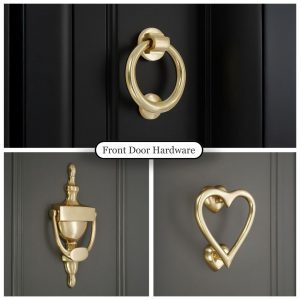
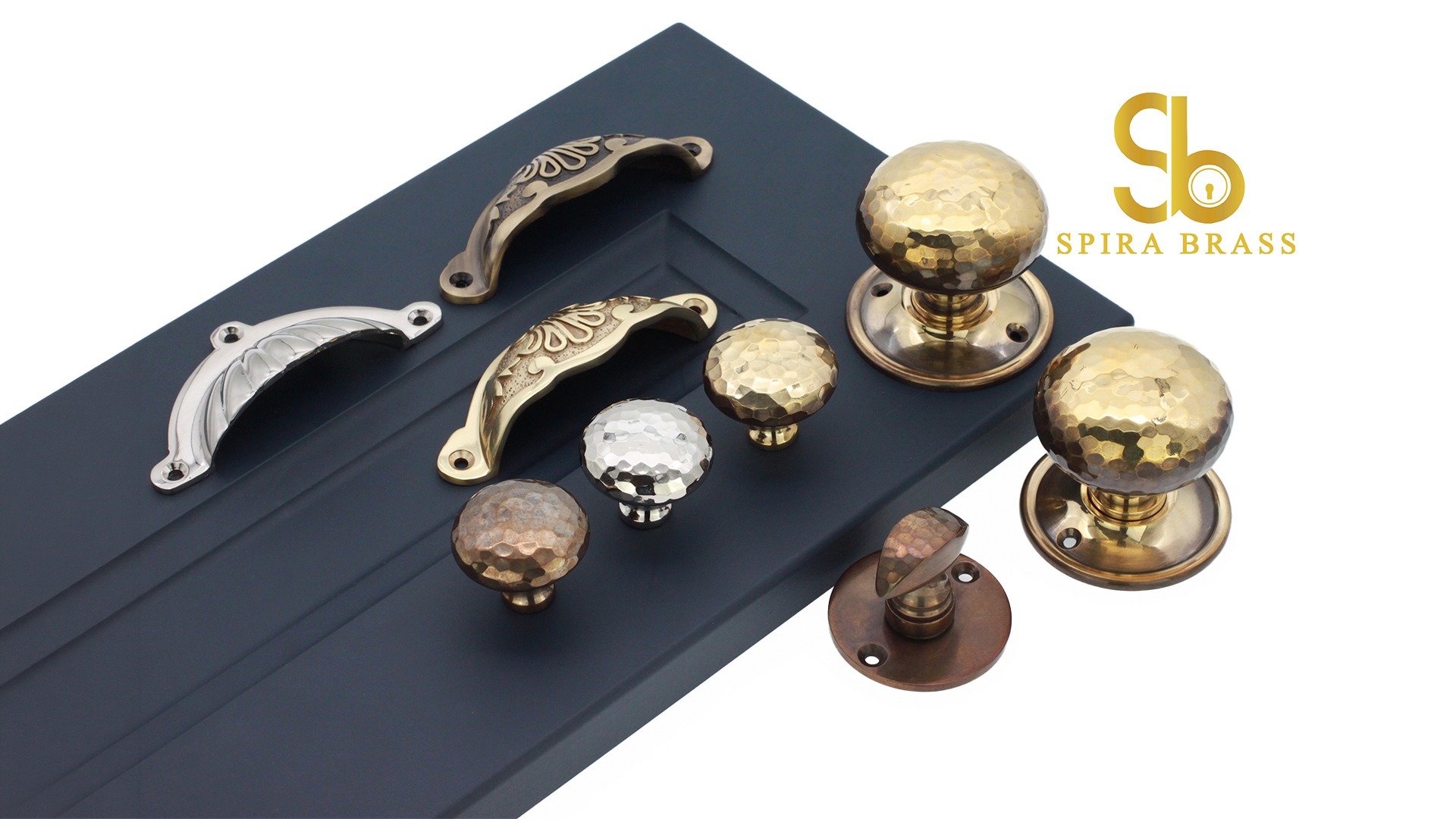
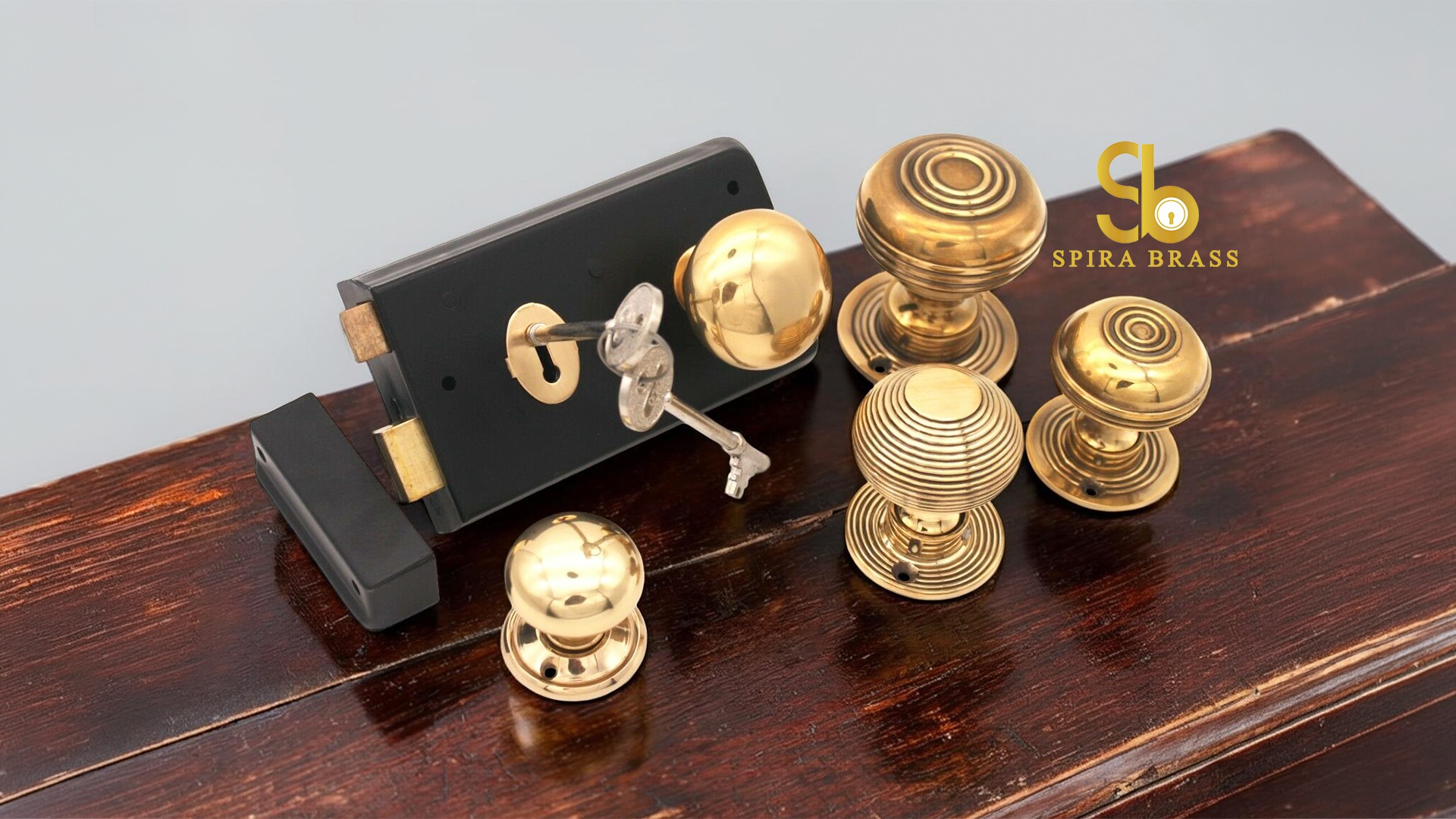
Front Door Hardware - Spira Brass
Sound familiar? You are not imagining it. Front door hardware genuinely does deteriorate faster than indoor hardware — and it is not random bad luck. There are very specific reasons why, and once you understand them, you will never buy exterior hardware the same way again.

The Front Door Is a Completely Different Environment

Here is the thing most people do not think about when they buy front door hardware: that knocker, that letterplate, that door knob — they are essentially living outside. Every single day.
Your indoor door handle sits in a climate-controlled room. It sees a steady temperature, no rain, no UV, no wind-driven grit. It is touched a handful of times a day and otherwise left alone.
Your front door hardware is a different story entirely.

The 5 Reasons Front Door Hardware Fails Faster

1. Rain and Moisture – Every Single Day

n the UK, rain is not an occasional visitor. It is a permanent resident. And every time it rains, your front door hardware gets wet – not just on the surface, but in the joints, around the fixing screws, inside the letterplate flap mechanism, and along the edges where the finish is thinnest.

Water finds its way into every gap. And when it sits in those gaps – even briefly – it begins the process of corrosion from the inside out. The outside of the hardware may still look acceptable while the mechanism inside is already rusting, stiffening, or weakening.

This is why a letterplate that opens smoothly in summer can feel stiff and resistant by winter. It is not the cold – it is accumulated moisture damage that has been building since the day it was installed.

What this means for your hardware choice: Any front door fitting needs to be made from a material that resists moisture at its core – not just coated on the outside. Solid brass, lacquered brass, and hot-dip galvanised iron are materials that handle moisture far better than thin-plated zinc alloys or hollow chrome fittings.

Explore our Front Door Hardware range – designed and finished specifically for external conditions.

2. UV Exposure – The Silent Finish Killer

Most people are surprised by this one. UV light from the sun is one of the most aggressive enemies of surface finishes – and your front door faces it directly, often for hours every day.

UV rays break down the molecular structure of lacquers, powder coatings, and plated finishes over time. The result is fading, chalking, and a patchy, bleached-out appearance – particularly on south and west-facing doors that get the most direct sun.

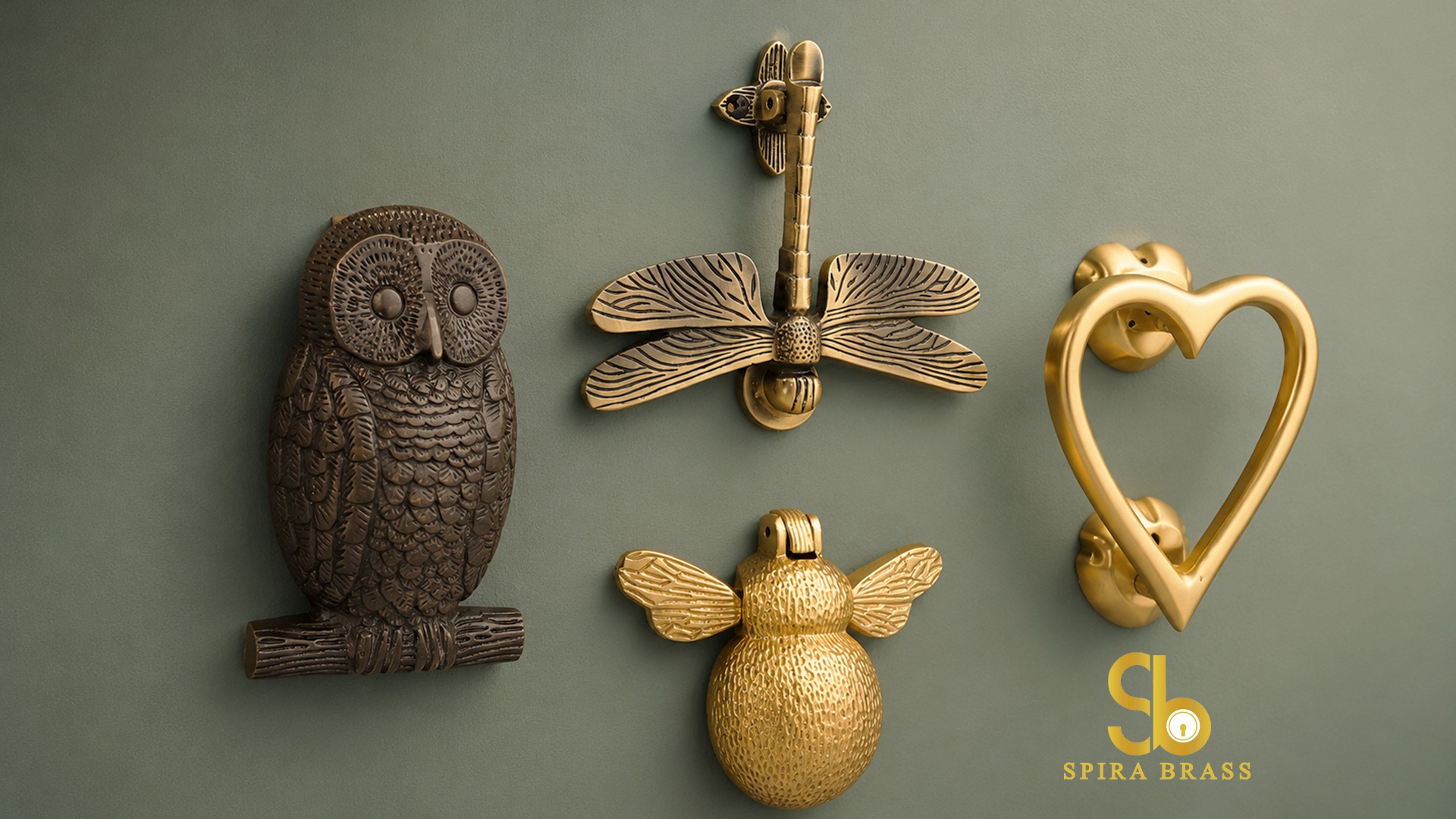
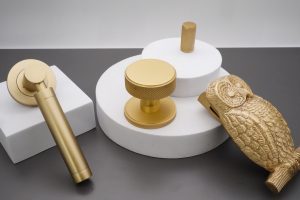
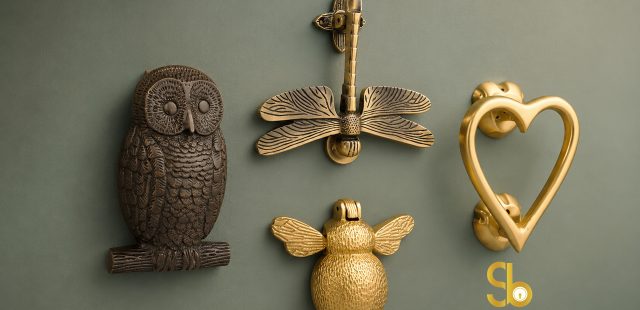
Front Door Hardware Door Knockers - Spira Brass

Indoor hardware never sees UV. That is why a cheap interior handle can look passable for years while the same hardware on a front door looks aged within a season.

What this means for your hardware choice: Finishes like lacquered brass, beeswax coated iron, or black powder coat over zinc-primed iron hold up significantly better under UV than standard plated finishes. They are designed to withstand the conditions your front door actually faces.

Browse our Door Knockers and Centre Door Knobs – finished to endure outdoor exposure without losing their character.

3. Thermal Expansion and Contraction

This one works slowly, but it is relentless. Metal expands when it is warm and contracts when it is cold. Your front door hardware goes through this cycle every single day – warming up in daylight, cooling down at night, and in winter going through more dramatic swings several times across a single day.

Over months and years, this repeated expansion and contraction does real damage. It loosens fixing screws as the metal shifts around them. It cracks thin finishes at the edges where movement concentrates. It stresses the joints between moving parts – particularly in letterplates and door knockers – eventually causing them to loosen, bind, or fail.

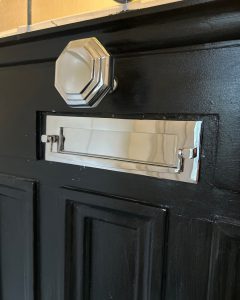
Front Door Hardware Door Plates - Spira Brass

Indoor hardware sits at a relatively stable temperature. It simply does not experience this mechanical stress in the same way.

What this means for your hardware choice: Hardware designed for external use needs thicker metal sections and more robust fixing points that can absorb this movement without working loose. It also needs a finish that has some natural flexibility – which is why beeswax coatings and certain lacquers outperform brittle plated finishes in external conditions.

See our Finger Plates & Letter Plates – built with the mechanical robustness that exterior hardware demands.

4. Salt Air, Pollution, and Airborne Contaminants

If you live near the coast, you already know about salt air. It accelerates corrosion dramatically – what might take three years to develop inland can appear within three months near the sea.

But even well inland, urban air carries pollutants, traffic particulates, and airborne chemicals that settle on exterior surfaces and react with metal finishes. Rain washes some of it off, but also drives some of it into the crevices of your hardware where it continues to react.

Your indoor handles see none of this. The air inside your home is filtered through walls, ceilings, and floors. It is incomparably cleaner than the air your front door hardware breathes all day.

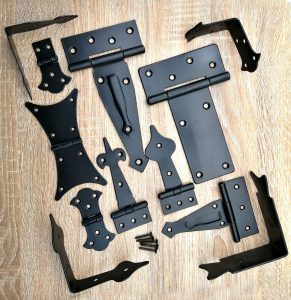
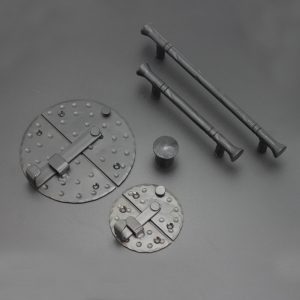
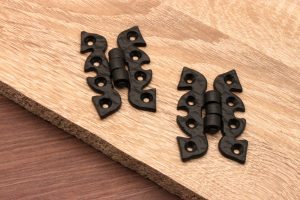
Front Door Hardware Black Smith Range - Spira Brass

What this means for your hardware choice: In coastal or urban environments especially, the base material matters enormously. Solid brass is naturally more corrosion-resistant than most alternatives. Our Blacksmith Range uses a zinc primer coat beneath UV colour fast the black powder coat – specifically to create a barrier against corrosion before the decorative finish is even applied. It is the kind of layered protection that outdoor hardware actually needs.

5. High-Use Mechanical Stress

Your front door is used more than any other door in the house. Every person who visits, every delivery, every time a family member leaves or returns – it all goes through the front door. A busy household might use the front door 20 to 30 times a day.

That means the door knocker gets struck, the letterplate gets pushed, the door knob gets gripped and turned, and the lock gets engaged and released – hundreds of times every week. Under load. In all weathers.

Compare that to a bedroom door handle, which might be used six to ten times on a normal day and sits in still, temperate air in between. The mechanical demand is simply not comparable.

What this means for your hardware choice: Front door hardware needs mechanisms that are engineered for repeated use under real-world conditions – not decorative fittings that look the part but are not built for it. The weight of the fitting, the quality of the internal spring mechanisms, and the robustness of the fixing points all matter far more on a front door than anywhere else in the house.

Explore our full Front Door Security range – made to perform under exactly these conditions.

The Real Problem: Most People Buy Indoor-Grade Hardware for an Outdoor Job

Here is what ties all of the above together. The most common reason front door hardware fails prematurely is not bad luck – it is that people buy hardware rated for interior use and install it in one of the most demanding environments a piece of metal can live in.

Front Door Hardware - Spira Brass

Many decorative hardware ranges – particularly budget options – are designed, tested, and finished for interior conditions. The plating is thin. The base metal is lightweight. The finish is not UV-stabilised. And the internal mechanisms are not designed to cope with temperature cycling or moisture ingress.

They look identical in the packaging. The difference only becomes apparent after six months on a front door.

What to Look for When Buying Front Door Hardware

Before you buy anything for your front door, ask these questions:

Is the base material solid or hollow? Solid brass and solid iron hold up. Hollow zinc alloy does not – at least not for long.

What is the finish, and is it rated for exterior use? Lacquered brass, black powder coat over zinc primer, beeswax-coated iron, and hot-dip galvanised finishes are genuinely exterior-grade. Thin chrome plate and standard electroplating are not.

Does the product have any external or weather-resistance specification? Quality exterior hardware will state it. If the listing says nothing about outdoor suitability, assume it is not.

Front Door Hardware - Spira Brass


Are the fixing points substantial? Lightweight backplates with small, closely spaced screw holes will work loose with thermal movement. Look for solid, well-spaced fixing points designed to stay tight.

How Spira Brass Approaches Front Door Hardware

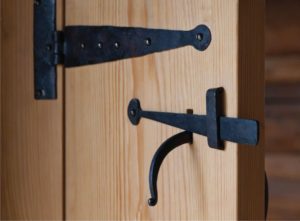
At Spira Brass, we make a clear distinction between what we produce for interior use and what we specify for the front door. Our exterior hardware is finished with protection layers designed for the actual conditions – lacquered coatings on brass collection, zinc primer plus black powder coat on our Blacksmith Range iron products, and beeswax coatings on handforged pieces.

Every product in our front door collection is built to be seen – and to stay looking the way it looked on day one, not just for a season but for years.

You can explore the full range below:

Conclusion

Your front door hardware works harder than any other hardware in your home. It faces rain, UV, salt air, pollution, temperature swings, and daily mechanical use – simultaneously, year round. Indoor hardware simply does not face these conditions.

The solution is not to accept that front door hardware has a short life. It is to choose hardware that is genuinely built for where it is going to live.

Buy for the outside, not for the showroom. Your front door deserves better than hardware that starts failing before winter is out.

Metal hardware are those items in our daily life that we do not really think about, such as door handles, door locks, hinges, cabinet fixtures. They are long-lasting, and even though rust begins to form earlier than one anticipates, it might be frustrating and confusing.

Initially, it can be only a simple stain. However, rust may wear out components, which becomes crude, hard, and unfaithful with time. The only thing about it is that it does not only occur in extreme conditions, but even in normal home conditions.


The Reason Why Metal Hardware Rusts Very Fast

The rust is formed by the combination of metal with moisture and oxygen. Although that is a natural process, there are some daily aspects that accelerate it faster than one would think.

Door Hardware Door Handle, Coat Hook | Spira Brass

1.Moisture is There All the Time.

Rust does not have to be formed in the presence of visible water. Moist air-like conditions particularly in kitchens, bathrooms or during season change- fires up corrosion in the best possible environment. Even dry places have the ability of corroding metal surfaces as time passes.

  1. The Quality of Metal Matters.

Hardware is not all created equal. Poorer-quality metals or items having thin protective layers might appear good in the beginning, however, they deteriorate very fast. When the outer covering wears out or is scratched, the bare metal is very susceptible.

Door Hardware Lever on Rose Door Handle | Spira Brass

  1. Wear is Furnished in Daily Use.

Whenever you open a handle or a lock it undergoes friction. This results in small scratches and wear holes with time. These minor dents enable water to get in to hasten the rusting process, but they are not directly visible.

  1. Environmental Exposure

Noise, pollution, and air quality are also to be considered. Such particles accumulate on the equipment surfaces and when mixed with moisture may accelerate the corrosion process-particularly in urban areas.


The reason Rust Doesn’t Need To Be Forgotten.

Rust may readily be considered as a cosmetic problem but they can be underlying.

  • Products depreciates with time.
  • Movement turns stiff, rough, or noisy
  • Fittings and locks can malfunction.
  • Frequent replacement raises the expenses.

What starts small can quickly affect both performance and reliability.


What You Can Do to Prevent Rust

Although rust cannot be avoided absolutely, there are practical ways to slow it down and protect your decorative items.

Door Hardware Hooks | Spira Brass

  1. Choose Better Materials

The greatest choice is the material itself. There are certain metals that are naturally stronger against corrosion and are lasting longer in use.

  1. Keep Hardware Clean

One should keep cleaning the surfaces regularly before they become damaged through dust and moisture. It is a simple habit that can be observed to have a visible difference as time goes by.

  1. Address Early Signs

In case of dullness, faintest discoloration or roughness, take immediate action. Minor repairs in the early years may eliminate larger problems in later life.

  1. Replace When Needed

At times the issue is not a maintenance problem but rather the hardware. When rust continues to reoccur, it is sometimes more practical in the long term to substitute it with more robust material.


A More Reliable Long Term Approach

When rust continues to appear even after frequent attention, it is usually not a care problem but is more likely to be in the material it is made of. That is the reason why most households and trades are slowly turning towards such high quality materials which are also lacquered and are more sustainable in the long-term.

Metal Hardware Door Knockers | Spira Brass

As compared to low quality metal, the brass and lacquered one does not act in this case on moisture, therefore, it is more resistant to corrosion. It is also durable in most real-life situations, maintains fewer repairs, and does not deteriorate gradually, which is characteristic of the inferior components.


This is the point where our SPIRA BRASS hardware products make the real difference. Our product range is made from high quality material and with an extra protective coated layer on it that made our product weatherproof and long-lasting. Our products are coated with in different protective layers such as lacquered, Beeswax coated, black powder and hot dipped galvanised coated as well. With that our products not only lives longer but also retains its appearance and functionality with an infinitely smaller amount of effort and is therefore a much more secure investment in the long term.


Conclusion

Rust can possibly be an irritating and insignificant thing at first, however, it can also be an indicator of greater problems related to material quality and durability. Simple conditions such as moisture, usage and exposure to the environment may make the metal product wear down unexpectedly.

It is not necessarily always being maintained but making smarter decisions at the very start. Investing in quality materials will lower the risk of rust, increase functionality, and prevent frequent replacement.

Since it does not matter what reliable components is under the skin, at the end of the day, it is about how it works, day by day out.

We all do it. You arrive at the front door carrying your shopping and you elbow the handle down or kick it a little at the bottom. It seems harmless enough. However, here is the point- those little daily routines are stealing years out of the life of your door handles. 

Door Hardware Door and cabinet accessories | Spira Brass

So whether you have spent up on beautiful door handles, solid brass door knobs or good architectural ironmongery, it does matter how you handle your hardware on a day-to-day basis. The good news? The majority of the damage is totally preventable, and you just need to know what to watch out on. 

And now we will pass through the most frequent offenders. 


Application of Harsh Cleaning Products on Hardware 

That is likely the most common error that the owners of the homes make concerning the maintenance of the door hardware. It is just logical – pick the same multi-purpose spray you apply on the worktops in the kitchen and wipe the handle. Job done, right? 

Door Hardware Handles | Spira Brass

Wrong. All domestic cleaners are bleach, ammonia or strong acid which is extremely nasty on brass and other metal finishes. Gradually these chemicals cause the protective lacquer on your door handles, which is made of brass, to be dull and rough and liable to tarnishing. What began as a shiny lever handle, might be seen in a few months to be worn and rusted. 

The solution is simple, a soft damp cloth and mild solution of soap should be used, as is necessary. In case of unlacquered metal, the trick is in a specialist metal cleaner that is applied sparingly. It is always important to dry the hardware well after, standing moisture is also another silent killer of good door hardware. 

Over-Tightening Screws on Hinges and Backplates 

When a hinge or a backplate is a little loose, the desire is to pick up a screwdriver and fasten everything as tight as you can. It appears to be accountable, even DIY-loving. Damage of door hinges and of the timber surrounding them is, however, one of the most common causes by over-tightening. 

By making sure that you over tighten screws, you squeeze and tear the fibers of wood behind the screws, that is, the screws no longer have anything to hold them after some time and the fittings slip off even quicker. The backplate itself can be broken or bent, too– especially by using thinner architectural hardware– or stripped of the screw heads, so that they become impossible to remove in the future. 

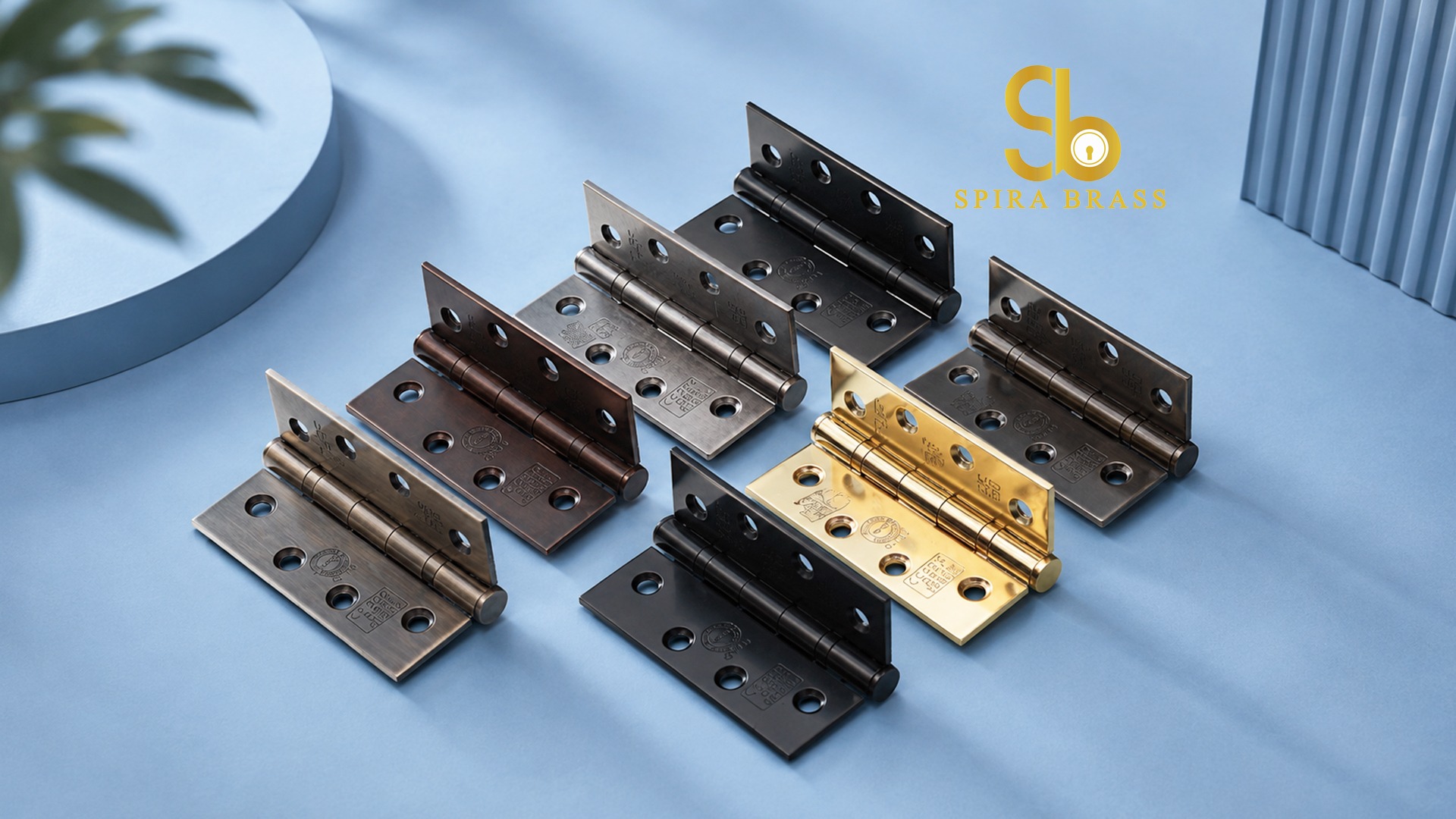
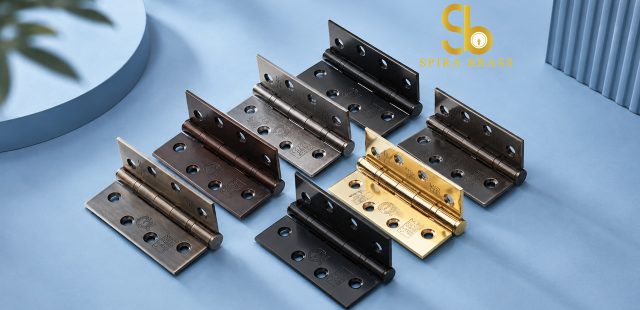
Door Hardware Door Hinges | Spira Brass

The correct method is to press hard and soft, tighten up until no movement is seen and then cease. When screws continue to loosen, the problem would be with the timber, but not the hardware. It is an old bit of joiner-trick to put in a couple of wooden matchsticks dipped into wood glue, into the screw-hole. 

Ignoring Stiff or Squeaky Handles and Hinges 

We have all had a squeaky hinge or a handle that requires a good heave to do the job. It turns into background music– something that you intend to clear up but you just never manage to do it. It is due to this reason that you should not leave it. 

A lever handle or door knob that can be felt as stiff is generally a sign that the internal mechanism – the sprung return – is becoming worn or dry. Each time you press a stiff handle, you are preventing the spindle and internal mechanisms against the needless pressure. And when left long enough, this will result in a complete break down of the mechanism, and the only way of putting it back on track is to completely replace the fitting, and not to smear a small portion of lubricant over it. 

Door Hardware Door Hinges | Spira Brass

The same thing can be said about squeaky hinges, which are dry and could be out of place. A drop of WD-40 or any lubricant silicone oil on the hinge pin is a long way. It is time to make it an annual home maintenance activity and you will be glad you did. 

Slamming Doors- More Damaging Than You Think. 

Hardware Door slamming action is same as speed bump driving at 40mph. The impulse shock regularly passes the vibration in all the parts, the latch, the lock, the hinges, the escutcheons, and the backplates. Months and years loosen this and bend the mechanisms and even break the rose plate on the more frail architectural door handles. 

The chief offenders are children and draughts. Door closers or soft-close buffers are an excellent investment – they not only help to save your hardware, but also the harmony at home. 


Not Observe the Keyhole and Locking Mechanism 

The majority of the population merely pays attention to their lock when it ceases to operate, and this is the same as just paying attention to your car engine when it runs out. The moving parts of mortice locks, rim locks, and latches require periodic lubrication in order to operate effectively. 

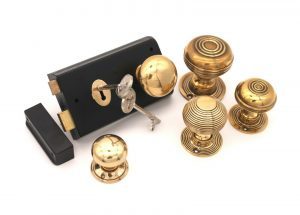
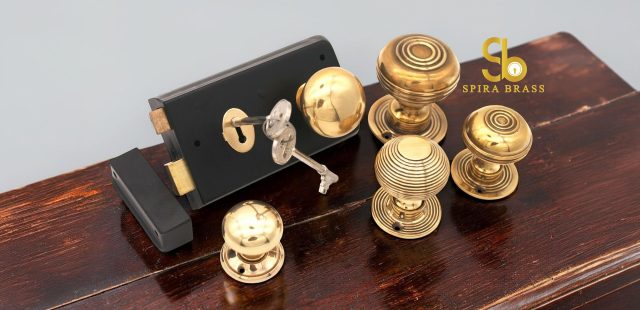
Door Hardware Knobs & Rim Lock | Spira Brass

Any hard pressing of the key, or harsh tugging at an unwilling latch is the surest method of bending the key, ruining the lock barrel, or completely cutting the latch mechanism open. A lubricating paint made out of graphite is rubbed directly inside the keyhole every one or two times in a year to ensure that everything runs smoothly. Oil based products should not be used in locks because they attract dust and gum up in the long run. 


Letting Condensation and Moisture Sit on Hardware 

Damp, we know about damp in UK. Yet when we are taking all this time worrying about damp on walls, the hardware on our front doors and the doors to our bath rooms is soaking and soaking without any sound. The condensation as well as the rain splash and steam in the bathrooms can also find their way into the joints and fixing of door hardware and cause corrosion, tarnishing and stiffening mechanisms. 

The front door hardware is particularly exposed. In case you observe the presence of water around your door knocker, letterplate or door knob when it rains, have a wipe down. It is just a moment and it really counts to the life of your door furniture. 


A Little Care Goes a Long Way 

Good architectural hardware – a gracefully made door handle, or a hand-weld hinge of iron, or a vintage mortice door knob – is designed to take decades to wear out. But it does require a lending of your hand. 

Replace the rough cleaners with the soft ones. Lubricate once a year. Wipe down after wet weather. Don’t force stiff mechanisms. These little practices do not consume hours but save your investment in years. 

At Spira Brass, we are producing and selling quality architectural hardware, which is meant to be able to withstand the test of time comes with high quality premium protective coating which gives you a hassle-free usage experience no tension of maintenance for a long period. You can also find our entire selection of door handlesdoor knobshingeslocks and front door hardware at Spira Brass. 


You have experienced that sensation when you enter your house and that something is going wrong. Not right, but not that right either. It is not always the paint color or the furniture set up that is making you feel frustrated sometimes it is those tiny things that you never really give a second thought before they are worn out.

Door Hardware | Spira Brass

I mean the handles in the doors, your cabinet knobs, the handles in your drawers, and all those other metal pieces that you touch dozens of times a day without even thinking about them. One day they were splendid and shiny, and now? They are wearing sort of shabbier, dirt, dullness. Maybe even a bit sad.

So what happened? We can get into the reasons as to why your hardware decor is getting old faster than you would prefer and more so, what you can do about it.

The Truth About Those Daily Touches

The point is as follows: those hands of yours are little chemistry laboratories. Whenever you get a door handle or open a drawer, you are leaving behind oils, sweat, lotions and all kinds of stuff that you have touched during the day on the metal. And I do hate to tell you, but human skin is acidic to a small degree. This acid gradually removes the finish that the hardware has on it.

Door Hardware | Spira Brass

Consider your most frequented door handle, most likely it is the one to the bathroom or bedroom. It is touched upon many times a day. That’s a lot of contact, and metal finishes aren’t invincible. The continuous touching erodes the protective coating little by little revealing the base metal. This can be normally seen on plated finishes like brushed nickel, oil-rubbed bronzes or polished brass.

The Invisible Enemy: Air Quality and Humidity

The quality of the air in your house is even more of a factor than you may imagine. One thing that you may notice was the fact that metal objects do not wear as well in a humid climate or towards the seas. This is because when there is moisture in the air, it becomes a source of oxidation, which rusts iron.

Door Hardware | Spira Brass

Even when you are not at the beach, daily tasks such as food preparation, showers, and even inhalation make your house air moist. Metal hardware especially does not perform well in bathrooms and kitchens. Hot shower steam as well as cooking vapours has not only water but also chemicals and minerals that can react with metal finishes.

And do not even mention cruel washing products. The lemon-smelling cleaner that you like? It may be slowly eating off the finish of your hardware. A lot of domestic detergents have acids or abrasives that in the long run can dull and destroy metal surfaces.

The Thin Finish Problem

This is an unpleasant fact: not every hardware is equal. That builder-grade door knob that your house had? It is likely of extremely thin finish, which was intended to stop the eye on the day of installation, rather than decades.

The cheaper hardware is frequently plated with less expensive techniques or thin finishes of lacquer which begin to corrode in one or two years. It is not readily apparent, but slowly the finish begins to appear patchy, discoloured or it may wear right through in contact areas.

The base metal matters too. In case it has a coating of a low-cost alloy on top, you will see that it is going to wear out at a very rapid rate compared to high-quality iron or solid brass.

The Sunshine Situation

Natural lighting is wonderful for your mood and your electric bill but not always great for your hardware finishes. The UV rays may make some finishes fade or discolour after some time, especially on the exterior doors or windows which are directly exposed to the sun.

You may be able to observe that the handle of your sun-drenched front door is not the same as that of your house. That is UV damage, to the point that it is gradually deteriorating the molecular structure of the finish.

The Maintenance We All Skip

And to tell the truth – when did you last wash your door knobs? I mean really cleaned them, not just given them a quick wipe when you noticed a smudge? The hardware should be maintained on a regular basis to ensure that it always looks good.

The dust, dirt, and grimes settle in the cracks and crevices forming a dull film rendering everything old and weary. This accumulation without periodical cleaning using the appropriate products promotes the aging process.

What You Can Do About It

The good news? You do not need to use outdated and aging hardware forever. Frequent light washing with a soft cloth and mild soap might perform miracles. Don’t use aggressive cleaners, and make sure your hardware is completely dry to avoid wet stains and rust.

In the case of damaged hardware that is already damaged, you can make a choice. Specialized polishes can be used to restore some finishes but this is normally a temporary solution. In most instances, the best option is to just buy the hardware with better-quality hardware which has been made to last.

Door Hardware Door and cabinet accessories | Spira Brass

To choose out new hardware, look for well-built items that have superior finishes. Living finishes such as unlacquered brass actually age to a beautiful patina and not just seen as being worn out. It is the difference between the graceful aging and the mere appearance of old age.

Think of the place that your hardware lives in as well. Hardware in the bathrooms and kitchen must be particularly hard and not easily affected by moisture and chemicals. And when you have busy locations, spend a lot of money on hardwares which survive the wear and tear as well.

The Simple Truth

Your hardware is a hard-working machine on a daily basis. With the oil of your hands to the moisture in your house, cleaning agents, the sunshine, and those finishes that used to be so shiny are beginning to look a little brashy at the edges, no wonder.

However, here is the point: your hardware is not only functional, but it is a piece of jewellery in your home. Those simple elements are likely to have a larger impact on your space than you may realise.  New, gorgeous equipment can totally change the appearance and the feel of the room.

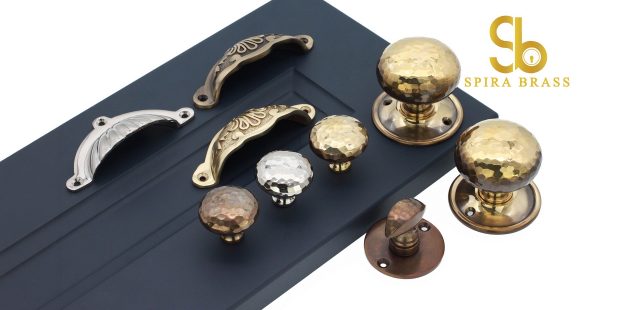
Door Hardware Cupboard Knob | Spira Brass

At Spira Brass we take a special care about the finishing and its durability whether on brass, iron or any material we use best techniques to make the finish durable and premium. Our brass range comes with a lacquered coating a layer which makes it corrosion resistant and long lasting. Handforged our hot dipped, Blacksmith range is salt tested comes with zinc coating before black powder coating and our Ironmongery collection also comes with a protective layer which makes them weatherproof and suitable for both interior and exterior use.

Our collections are meant to last for generations forged to impress you with their design and quality so that our products can stand many steps ahead when it comes to quality and design because they are tested made of high-grade metals.

We believe buying hardware should be one time investment that’s why at Spira Brass we take care of all your problems so that you don’t have to worry about regular hassle of cleaning or maintaining them or wasting time on searching replacement of your hardware’s after a while.

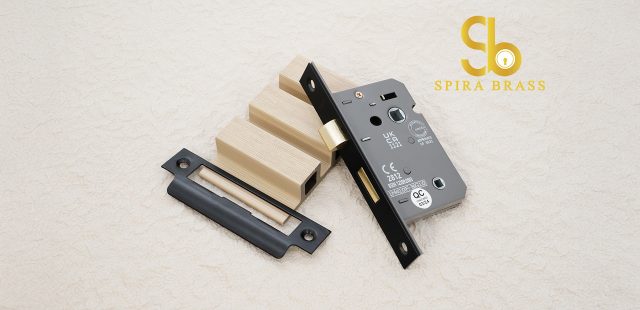
In the case of home security, locks tend to matter most. The sash lock is one of such accessory. A sash lock can be installed on doors, and it is in charge of ensuring that your space is safe, aligned and convenient. The best hardware will wear even with time. Not only does this increase the safety but it also makes the doors in general to be safe from security breaches and perform better as well as when the right time to change your sash lock comes. 

The following are the most noticeable indications that it might be time to change your sash lock- and why using high quality hardware is really all the difference.  

Sash Lock | Spira Brass

Hard or Easy locking or unlocking. 

A sash lock must be able to work without much effort. When you feel as if you are bending the handle and having trouble turning the lock or when it jams all the time, then it is a good indicator that the inside is worn. This problem is usually caused by dust, rust or by weakening internal parts. The replacement of such a lock with a lock made of high quality material with tight tolerance, makes the use hassle-free and makes it reliable in the long term. 

Unstable or loose lock Hardware. 

Once the lock becomes loose or does not sit firmly on the door or window then it reduces the security. Although tightening screws could be a temporary fix, recurrence of looseness normally implies that the lock body has become weak. In this case you can check the fixing points, tightens or replace the screws, check lock alignment, or replace the lock if looseness recurs and make sure to choose higher-quality hardware. 

Sash Lock | Spira Brass

Observable rust, tarnish or corrosion. 

Rust or corrosion is a distinct symptom that you have a rotting sash lock. This particularly occurs in wet places. Worn out locks are not only unattractive, but do not work reliably either. Heavy rust typically indicates that the lock is no longer trustworthy, while light surface stains may be manually cleaned. Corroded locks can become less secure, stiff, and challenging to operate. It’s preferable to replace the lock and select corrosion-resistant hardware to ensure safety and smooth functioning, particularly in moist regions, and to stop the issue from happening again. 

Sash Lock | Spira Brass

Unfavorable Fitting in line with the Frame. 

A sash lock that is no longer aligned with the strike plate may present openings, insulation, and decrease security. Although movement at the door or through the window may also be a contributing factor to this phenomenon, the problem may be increased by the existence of worn out locks. It should be upgraded to a sash lock that is well engineered so that it fits perfectly and its closing is tight and more secure.  

Poor Grip or Cloistered Closure. 

When your lock no longer reliably closes the door or window into place, then that lowers the effectiveness of safety and energy usage. A sash lock is supposed to be firm and not movable. Once this tension is lost, the obvious sign is that the inner mechanism of it has become weary. A high quality sash lock will replace it and this will bring back the proper functioning as well as stability. 

Unusual Sounds During Use 

The sound of grinding, clicking, or scraping when using a sash lock indicates internal damage. The sounds are usually characteristic of imminent failure. Rather than waiting to have a breakdown, an early upgrade to a Spira Brass sash lock is guaranteed to operate silently with ease and with a sense of security. 

Sash Lock | Spira Brass

Routine Maintenance or Repair. 

When you are always fixing, greasing or replacing the same sash lock then it is no longer economical to retain the same. Repairs which are frequently conducted show the expiry of the lock. When a high quality sash lock is invested in once, it will not require much maintenance and will deliver long performance. 

Obsolete Design or Security Standards. 

Elderly sash locks might be not as secure as modern standards or design preferences allow. The modern day houses require robust and long-lasting hardware. So make sure to buy sash locks which fulfill the present-day security requirements and have security standards which are required for modern housing. 

Keyes Not Working Easily (Keyed Sash Locks) 

When the key sticks, jams or feels rough during turning, internal parts can be destroyed. This may result in lockouts or partial locking. Select a premium keyed sash lock with a smooth, well-engineered mechanism that is constructed of high quality material, in order to prevent lockouts and ensure reliable, long-term functionality, modern locks are made with easy key operation and enhanced security. 

Sash Lock | Spira Brass

Conclusion 

A broken sash lock is no mere inconvenience, but a danger. When you find that it is stiff, floppy, corroded, and not fitting, then you need to change your lock. Spira Brass sash locks are the best to do an upgrade to guarantee a high level of performance, safety and the long-lasting functioning. At Spira Brass, we feel hardware must not merely be functional but must be reliable, strong and that it must be well-designed and made in a gorgeous way. We sell different types of sash locks whether it’s a 3 lever sash lock or 5 lever sash lock, certified or non-certified, euro profile sash locks, latches, deadbolts etc.

Check out our locks collection here. 

Also, explore our newly launched products across different categories—click here to discover what’s new.

Select hardware that secures your space. Select Spira Brass -where quality, security, and craftsmanship is combined.