Mini Cart

Brass has long been admired for its warm golden appearance, timeless appeal, and unique ability to match both modern and traditional interiors. However, if you are someone who has selected unlacquered brass hardware, then you are probably already aware of the fact that it is not something that is covered with a layer of protective lacquer. This also means that the hardware with this finish would not only react with air, with touch and with time; not only that, the bright golden color will slowly turn into a warm, honeyed patina, and that is the same quality that is why it is chosen by so many homeowners, interior designers and architects, but it is the same thing which somehow requires a little more care and cleaning with a slightly different approach than the lacquered one.  

Once you dare to clean it the wrong way, it can strip away all the patina you have been dreaming of developing the whole time to be developed. If you clean it the right way, then you will keep your door hardware looking as it should be: full of aesthetics, character, warmth, and whatnot.  

Here, in this guide, we will explore and learn what exactly you should do to keep your unlacquered brass hardware safe and how often you need to do it.   

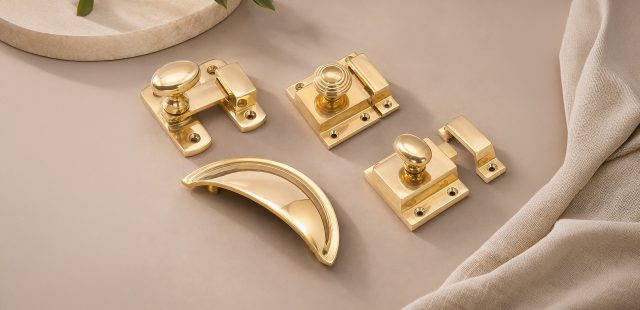
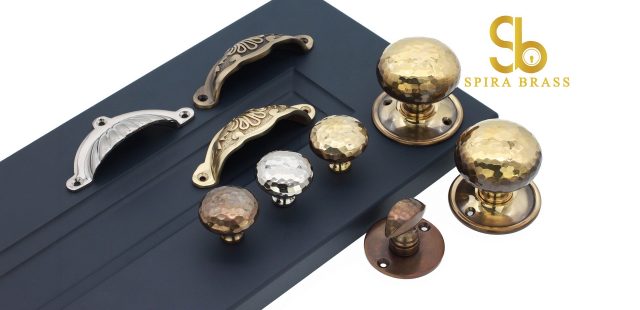
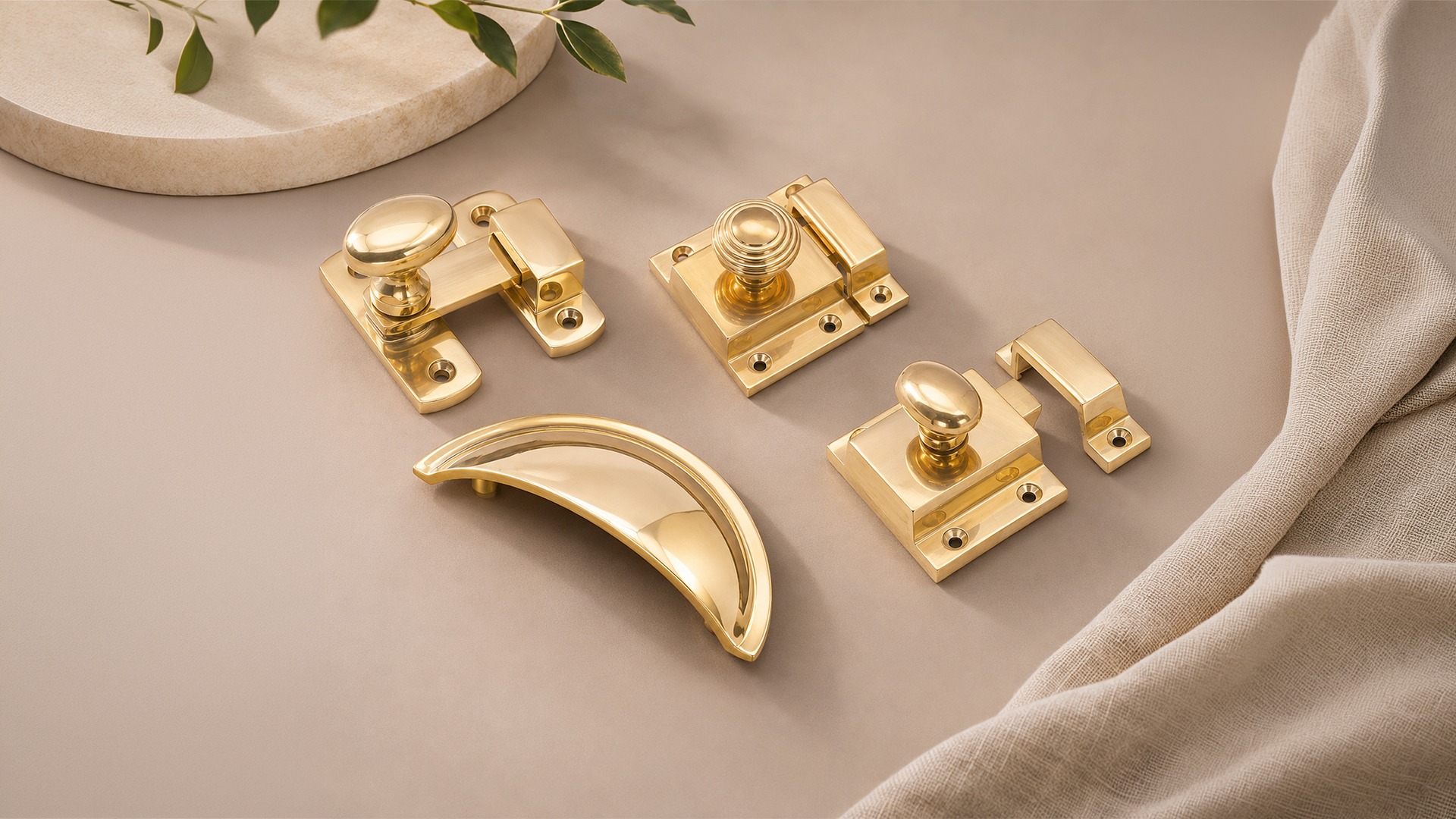
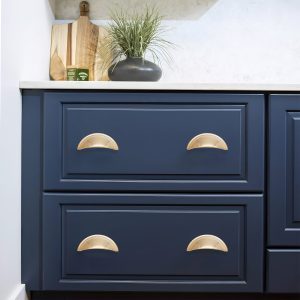
Unlacquered Brass Cupboard Catch

Understanding Unlacquered Brass 

Before picking up a cloth, it helps to understand what you are working with. Brass is an alloy of copper and zinc. Lacquered brass has a clear protective coating that seals the metal from the air, while unlacquered brass is left raw so the metal can develop character naturally. 

Unlacquered brass hardware is so popular in period properties, hotel and modern home. Handle, knob, pull handle, letter plate, knocker and hinge all change slowly through use. Areas that are regularly touched, such as lever handles, remain stay brighter, while less handled areas darken. The end result is a finish that is unique to your homes. 

Because there is no lacquer to protect it, unlacquered brass is also more forgiving than many people realise. Scratches blend into the patina, and the finish can always be refreshed. Unlike coated finishes, it never peels or flakes, and it can be polished back to brightness whenever you wish. 

Why Do They Behave Differently?  

Before cleaning unlacquered brass, it is important to understand what makes it different from other metals.  

As much architectural hardware today has been constructed with a clear coating of lacquer, which keeps the hardware shiny and untarnished for years to come without much maintenance, on the other hand, unlacquered brass is solid brass or brass-plated hardware that does not have any protective layer of lacquer coating. This results in the metal developing a natural patina over time, which is exactly why many people consider this finish in the first place. Not only is this the same finish also available in many other door hardware. 

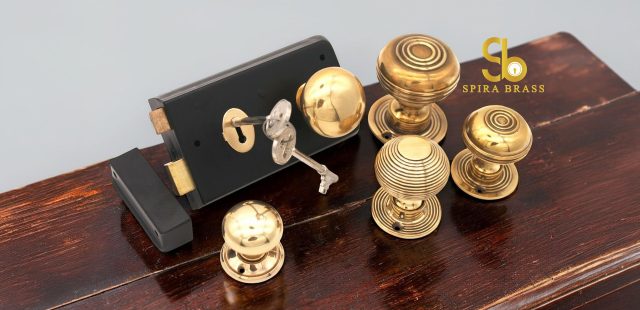
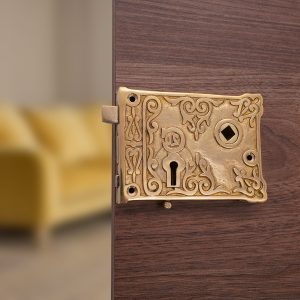
Unlacquered Brass Rim Lock Door Hardware

Step-by-Step: Cleaning Unlacquered Brass Door Handles 

  • Dust and wipe: Remove loose dust and grit with a dry cloth first, so nothing scratches the surface while you clean.
  • Wash gently: Wipe handles and backplates with a soft cloth dampened in warm water and a few drops of washing-up liquid. Use a soft toothbrush around screws and detailing. 
  • Rinse and dry fully: Wipe off soap residue with a damp cloth, then dry immediately with a fresh one. Leftover moisture causes spots and dark patches.
  • Remove tarnish: If it’s still dull, use a brass polish, a lemon and baking soda paste (2 to 3 minutes), or a flour, salt, and vinegar paste (up to 10 minutes). Rinse thoroughly afterwards. 
  • Buff and protect (optional): Buff with a dry microfibre cloth in small circles, then apply a thin coat of wax to slow tarnish. Skip the wax if you prefer a natural patina. 

What to Avoid? 

  • Steel wool or scouring powders. They scratch the surface and leaving permanent marks. 
  • Bleach, ammonia, or harsh cleaners. These can cause discolouration and pitting. 
  • Leaving cleaning pastes on too long. Acids can etch the metal.

There is a particular kind of frustration that comes from revisiting a project two years after handover. Everything looks right –  the colors have settled, the furniture is worn nicely, the client has made it their own. And then your eye lands on the door handle. The finish has gone flat or worse, patchy. And you remember making that specification in a hurry because the budget was tight or the deadline was close. 

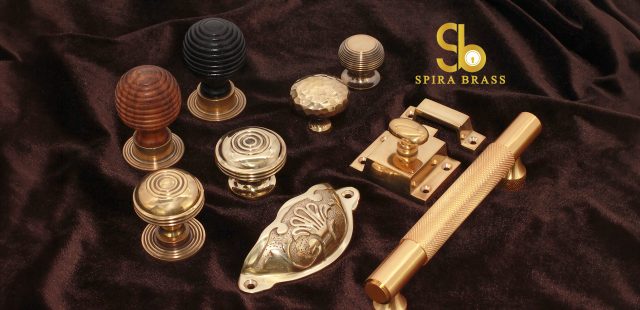
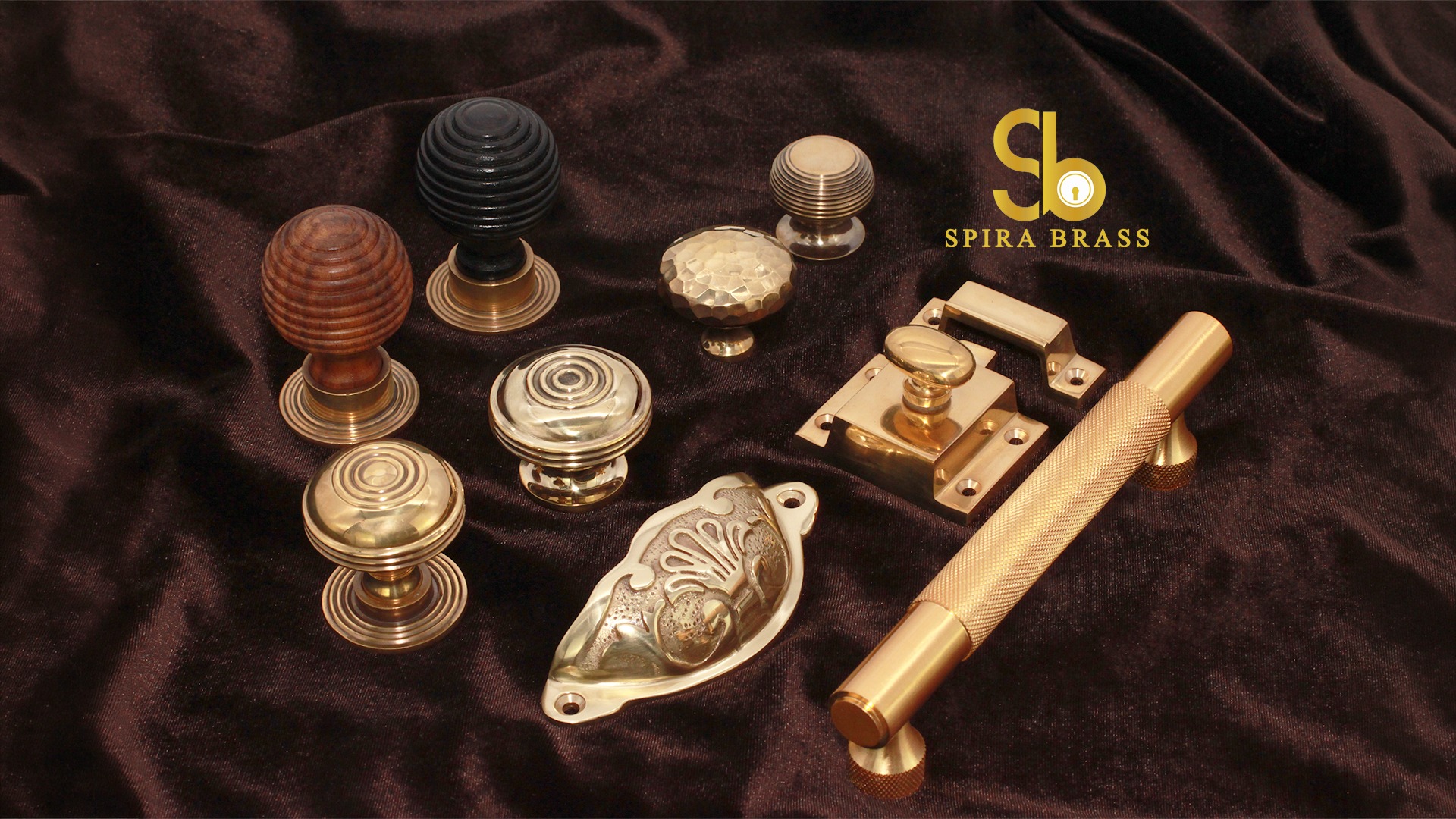
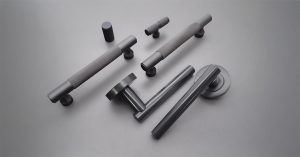
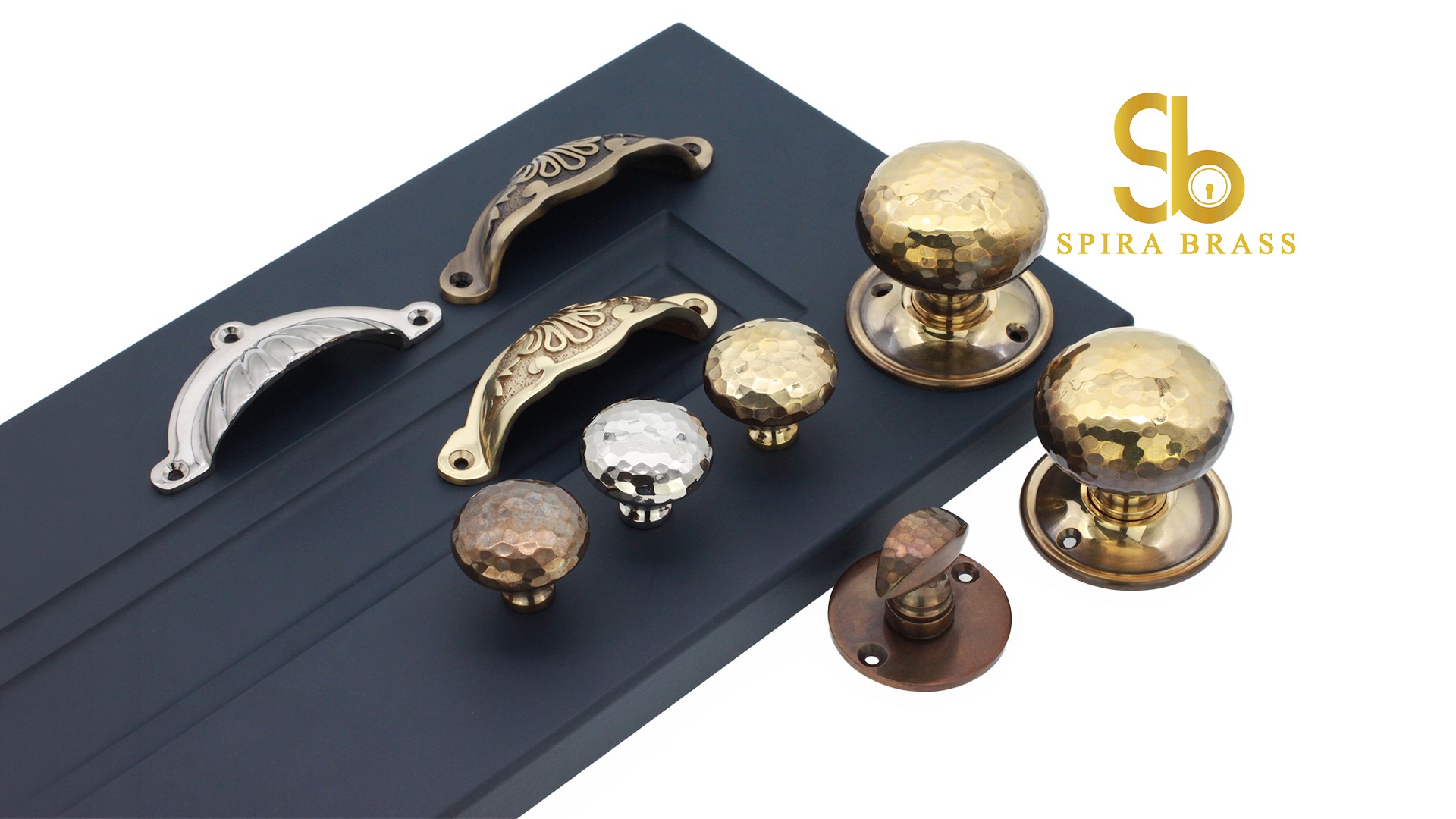
Cupboard Pulls Door Hardware | Spira Brass

Finish selection does not get talked about enough in design circles. Everyone has opinions on paint, on fabric, on flooring. Hardware finishes tend to get picked late in the process, often under pressure, and that is exactly when the wrong calls get made. This is a checklist I wish someone had handed me earlier – not a catalogue rundown, but an honest look at what performs, what demands more of your client than they signed up for, and what to specify when the brief pulls in different directions. 

Polished Brass: Commit to It or Leave It Alone 

Polished brass is genuinely beautiful and genuinely demanding. There is no middle ground with it. 

The unlacquered version – which is the one worth specifying if you want real depth and character – will shift over time. Heavy contact areas go lighter. Low-traffic surfaces darken. That slow evolution is either the whole point or a complete nightmare, depending on the client sitting across from you. Before you put it on a schedule, have that conversation. Some clients will love the idea of hardware that develops a story. Others will ring you in eight months asking why their handles look uneven. 

Lacquered polished brass holds its look longer and needs nothing more than a soft cloth. You lose some of the warmth and depth but you gain predictability. For clients who entertain a lot, have young children, or simply want things to look the same in five years as they did on day one – lacquered is the honest recommendation. 

Where polished brass really earns its place is in schemes with marble, dark painted joinery, or raw stone. The warmth it brings into those environments is hard to replicate with anything else. 


Aged Brass: The One That Does the Work Quietly 

If I could only specify one finish across a broad range of residential projects, aged brass would be a serious contender. 

It arrives already looking like it has been there a while, which on any period or heritage project is an enormous advantage. The recessed areas are darker, the raised surfaces catch the light – and because it already looks lived in, it continues to look right as actual use adds to that story. Fingerprints do not show the way they do on polished surfaces. It does not need polishing. It does not react dramatically to condensation or humidity. 

The aged brass range at Spira Brass works particularly well on country houses, older cottages, and any project where the client has used warm neutrals, natural textiles and reclaimed or heavily grained timber. It does not fight the materials around it. It just sits there looking like it belongs, which is ultimately what good hardware should do. 

Door Handles Door Hardware | Spira Brass

Antique and Aged Bronze: For Rooms That Are Meant to Feel Heavy 

Bronze finishes are not for every project and they are not meant to be. Where aged brass is warm and approachable, antique is darker, more brooding – closer to the colour of old leather or dark wood than to anything bright or reflective. 

It works in dining rooms with deep wall colours. Libraries. Studies with floor-to-ceiling shelving and reading chairs. Spaces where the mood is deliberately settled and the palette runs dark throughout. Specify it in a light-filled, neutral Scandi scheme and it looks like a mistake. Specify it in a room where someone has used Farrow and Ball’s Railings or Studio Green on the walls and it looks completely inevitable. 

This is a finish that rewards confidence in the brief. If the room is going dark, go dark with the hardware too. 

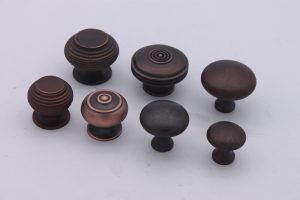
Door Knobs Door Hardware | Spira Brass

Handforged Iron: Only When It Is Genuinely Right 

The handforged iron range is one of those things that either fits perfectly or sticks out completely. There is no in-between. 

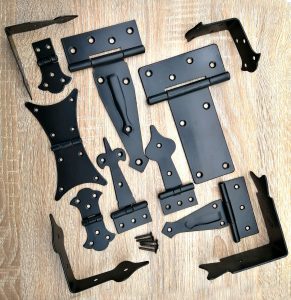
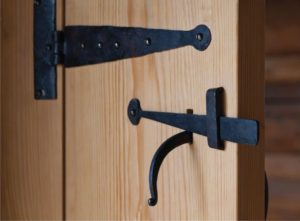
Barn conversions, rural properties with exposed beams, Arts and Crafts houses, farmhouse kitchens – this is where handforged ironwork belongs. The surface variation, the slightly uneven edges, the honest marks of the making process – all of that reads as completely authentic in those environments. Put the same hardware in a clean, white-walled London flat and it looks like a prop. 

One practical note for the client brief: iron in high-moisture rooms needs occasional treatment with a light wax or oil to stay in good condition & our products already comes with a beeswax coating which makes the iron moisture proof and prevents it from getting corrode. 

Matt Black: Still Works, but Stop Defaulting to It 

Three or four years ago, matt black was everywhere. Kitchen showrooms, hotel bathrooms, editorial shoots – it became the shorthand for contemporary design in the same way that brushed chrome was in the early 2000s. That level of saturation tends to date things. 

Used deliberately, matt black hardware is still sharp and effective. Industrial spaces, bold monochrome schemes, dark cabinetry – it reads as intentional in those contexts. The issue arises when it gets specified as a default rather than a decision. 

The one maintenance point worth flagging: matt black surfaces show dust more than clients expect. It looks exceptional on the day the photographer comes. After two weeks of normal life it needs attention. Worth mentioning before you finalise the schedule. 

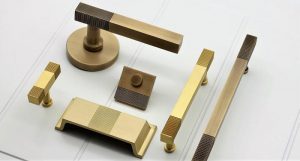
Door Handle Door Hardware | Spira Brass

The Thing That Ties It All Together 

Whatever finish you land on, the single most important thing is running it consistently. Handles, hinges, escutcheons, bathroom accessories, cabinet hardware – when the same finish appears throughout a property in a coherent way, the scheme feels resolved. When it does not, something feels slightly off even if nobody can identify exactly what. 

Spira Brass carries all of the above finishes across their full architectural hardware range, which makes cross-room consistency straightforward to achieve. Samples are available through their stockist network across the UK – worth ordering before you finalise anything, because finish colours on screen and in person are rarely the same thing. 

Ask five different joiners this question and you will likely get five different answers. Two hinges. Three hinges. Depends on the door. Depends on the frame. It is one of those things that sounds simple until you actually try to pin down a straight answer. 

Here is the thing – they are all partly right. There genuinely is no one-size-fits-all number. What there is, however, is a clear set of factors that will tell you exactly what any specific door needs. Once you understand those, the decision makes itself.

Door Hinges Door Hardware

What a Hinge Is Actually Doing 

People think of hinges as simple joining pieces. In reality, they are load-bearing components carrying the full weight of a door every single time it moves. 

That load does not distribute itself neatly. The top fixing takes the most strain. The bottom takes the least. Every cycle puts stress through the screws, through the timber, and through the metal itself. Get the count wrong and you will see it eventually – one that starts dropping at the latch side, screws that keep working loose, or that classic scraping sound along the floor that arrives quietly and then never quite goes away. 

Getting it right from the start costs almost nothing extra. Getting it wrong costs you a rehang.

The 3 Things That Settle the Question: 

  1. Height

Height is where every calculation starts. The taller the door, the longer the lever arm between the top fixing and the latch side. That leverage puts more rotational force on the top mounting – and one extra fixing point makes a significant difference in managing it. 

The UK joinery trade generally works to this guide: 

  • Up to 1981mm – 2 hinges minimum, though 3 has become common practice even at standard height 
  • 1981mm to 2286mm – 3 as the minimum 
  • Over 2286mm – 3 at minimum, with 4 depending on weight and type of hinge standard or heavy-duty 

Older properties catch people out here. Victorian and Edwardian homes often run taller internally – they look ordinary until you measure and realise they sit comfortably in the three-hinge bracket. 

When in doubt, go one up. The price difference between two and three hinges is negligible. The cost of rehanging something that has dropped and taken the frame with it is not.

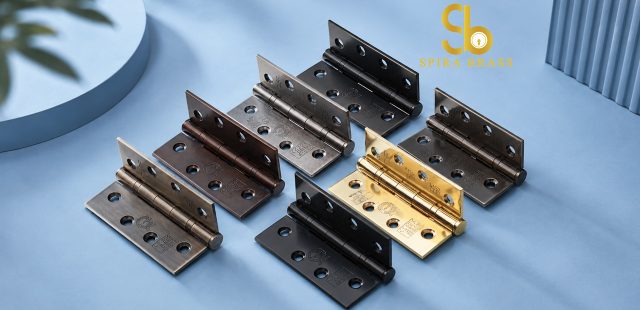
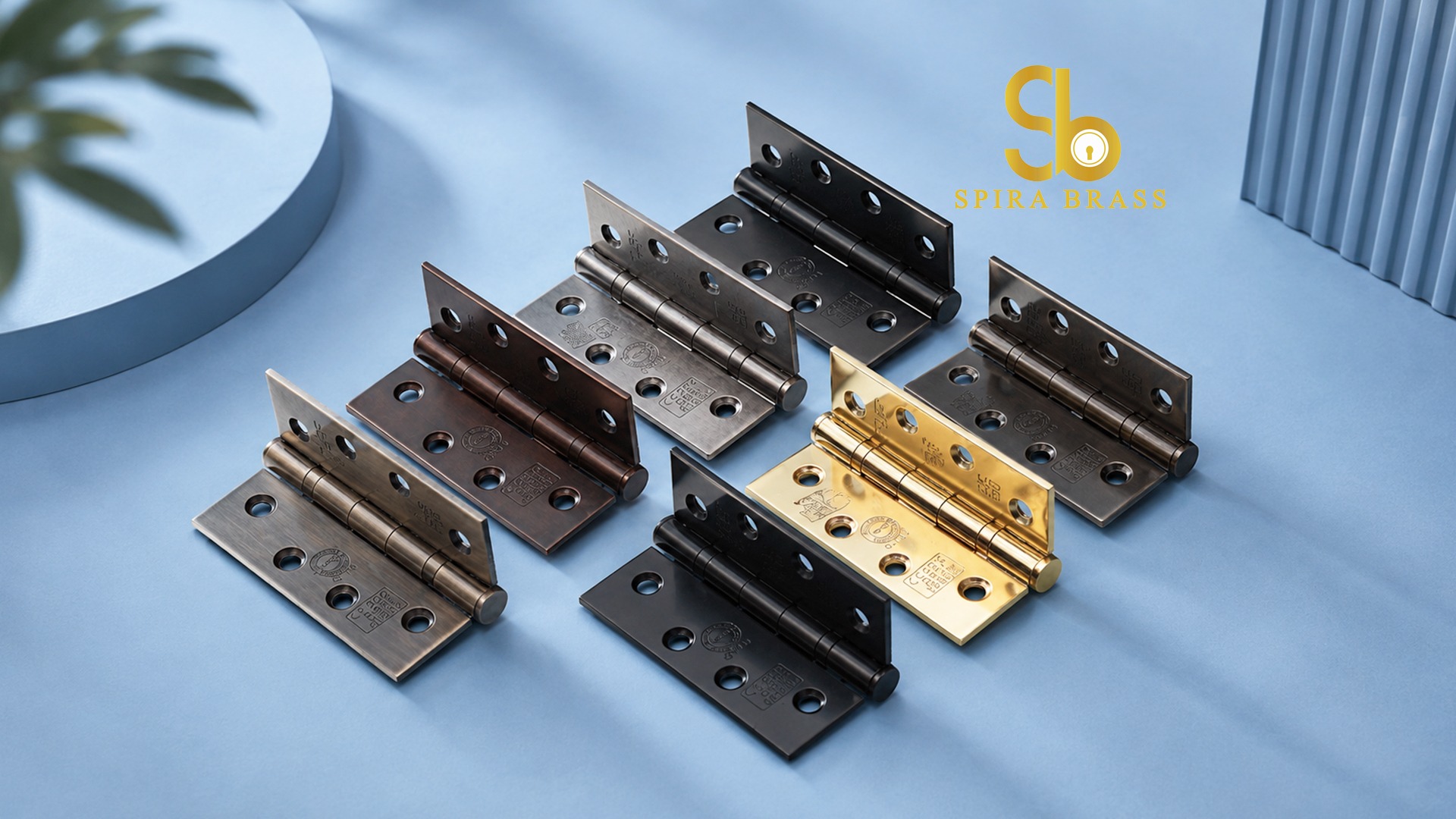
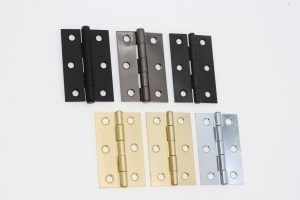
Door Hinges in different finishes Door Hardware

  1. Weight

Height sets your baseline. Weight is what moves you above it. 

A standard hollow-core option – the lightweight kind common in new-builds – sits comfortably on two good fixings at standard height. The moment you step up to solid timber, hardwood, fire-rated options, or anything with glass panels, the weight changes the picture considerably. 

A rough guide: 

  • Hollow core up to 25kg – 2 fixings at standard height 
  • Solid softwood or light fire-rated, 25–40kg – 3 recommended 
  • Solid hardwood, heavy fire-rated, glazed panels, 40kg+ – 3 minimum, 4 for anything seriously heavy 
  • Any external door – always 3, regardless of weight 

There is a simple field test if you do not have scales to hand. Pick up one end before it goes up. One hand lifts it easily – two fixings will likely do the job. Both hands and some effort – plan for three. Two people needed – three minimum, possibly four. 

External doors deserve special mention. Beyond the weight, they deal with wind load every time they open in a breeze. A solid front entrance caught by a strong gust takes a sudden shock through the fixings that a light internal fitting never experiences. Three hinges are not optional here – it is just correct practice.

  1. How Hard the Door Works

This one rarely makes it into standard guidance, which is a shame because it genuinely matters. 

A spare bedroom might see ten cycles on a busy day. A busy family kitchen might see sixty or more. A commercial entrance during a lunch service could see several hundred. Every cycle is mechanical stress. Over months and years, high-use fittings simply wear their fixings faster than identical fittings in quieter spots. 

For most homes this is a fine-tuning factor rather than a deciding one. But for any fitting that genuinely works hard – a main hallway, a utility room, anywhere the whole household passes through dozens of times daily – an extra fixing is cheap insurance that pays for itself over the life of the installation.

Does Hinge Size Matter Too? 

Yes, and it works alongside count rather than separately. 

A 76mm (3 inch) option suits most standard internal work. Step up to 100mm (4 inch) for heavier internal applications and anything external. At 125mm you are into gates, barn doors, and anything with serious load demands. 

Three undersized fixings on a heavy door will not perform as well as three correctly sized ones. The specification needs to suit the task – not just the number. 

Spira Brass carries the full range across door hinges, Hook and Band, T-Hinges, and Decorative options for period properties – so you can match both size and count to what the situation actually demands.

Door Hinges Door Hardware

The Quick Check Before You Buy 

Run through these before settling on a number. Each one that applies pushes you toward the higher count: 

  • Over 1981mm tall 
  • Solid timber or glazed panels 
  • External fitting 
  • High traffic location 
  • Older property with heavy period style woodwork 
  • Fire door with a closer 

Two or more of these together – start at three, not two. 

Conclusion 

Two works for light, standard-height internal doors that do not see heavy use. Most other situations – taller, heavier, busier, or outside – call for three. When the numbers are borderline, go up rather than down. The difference in cost is trivial. The difference in how things behave over the next ten years is not. 

Browse the full range at Spira Brass: Door Hinges · Hook and Band · T-Hinges · Decorative Hinges · Ironmongery Kits · Handforged Latches & Hinges 

You bought what looked like a perfectly good door knocker. A solid letter plate or a beautiful centre knob. They looked great on day one — polished, proud, and exactly what you wanted.
Then six months later, you notice the finish is dull. A year in, there’s discolouration around the edges. Two years on, the knocker has gone patchy, the letter plate stiffens every time it rains, and the knob has lost the look that made you choose it in the first place.
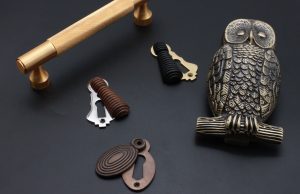
Front Door Hardware - Spira Brass
Sound familiar? You are not imagining it. Front door hardware genuinely does deteriorate faster than indoor hardware — and it is not random bad luck. There are very specific reasons why, and once you understand them, you will never buy exterior hardware the same way again.

The Front Door Is a Completely Different Environment

Here is the thing most people do not think about when they buy front door hardware: that knocker, that letterplate, that door knob — they are essentially living outside. Every single day.
Your indoor door handle sits in a climate-controlled room. It sees a steady temperature, no rain, no UV, no wind-driven grit. It is touched a handful of times a day and otherwise left alone.
Your front door hardware is a different story entirely.

The 5 Reasons Front Door Hardware Fails Faster

1. Rain and Moisture – Every Single Day

n the UK, rain is not an occasional visitor. It is a permanent resident. And every time it rains, your front door hardware gets wet – not just on the surface, but in the joints, around the fixing screws, inside the letterplate flap mechanism, and along the edges where the finish is thinnest.

Water finds its way into every gap. And when it sits in those gaps – even briefly – it begins the process of corrosion from the inside out. The outside of the hardware may still look acceptable while the mechanism inside is already rusting, stiffening, or weakening.

This is why a letterplate that opens smoothly in summer can feel stiff and resistant by winter. It is not the cold – it is accumulated moisture damage that has been building since the day it was installed.

What this means for your hardware choice: Any front door fitting needs to be made from a material that resists moisture at its core – not just coated on the outside. Solid brass, lacquered brass, and hot-dip galvanised iron are materials that handle moisture far better than thin-plated zinc alloys or hollow chrome fittings.

Explore our Front Door Hardware range – designed and finished specifically for external conditions.

2. UV Exposure – The Silent Finish Killer

Most people are surprised by this one. UV light from the sun is one of the most aggressive enemies of surface finishes – and your front door faces it directly, often for hours every day.

UV rays break down the molecular structure of lacquers, powder coatings, and plated finishes over time. The result is fading, chalking, and a patchy, bleached-out appearance – particularly on south and west-facing doors that get the most direct sun.
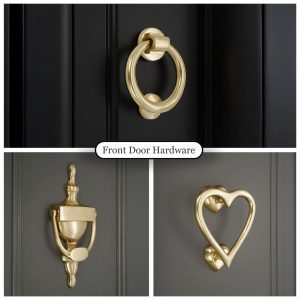
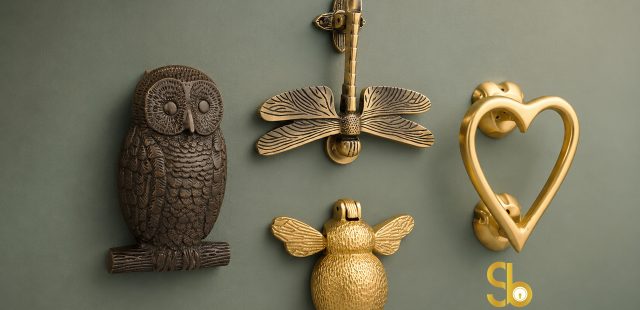
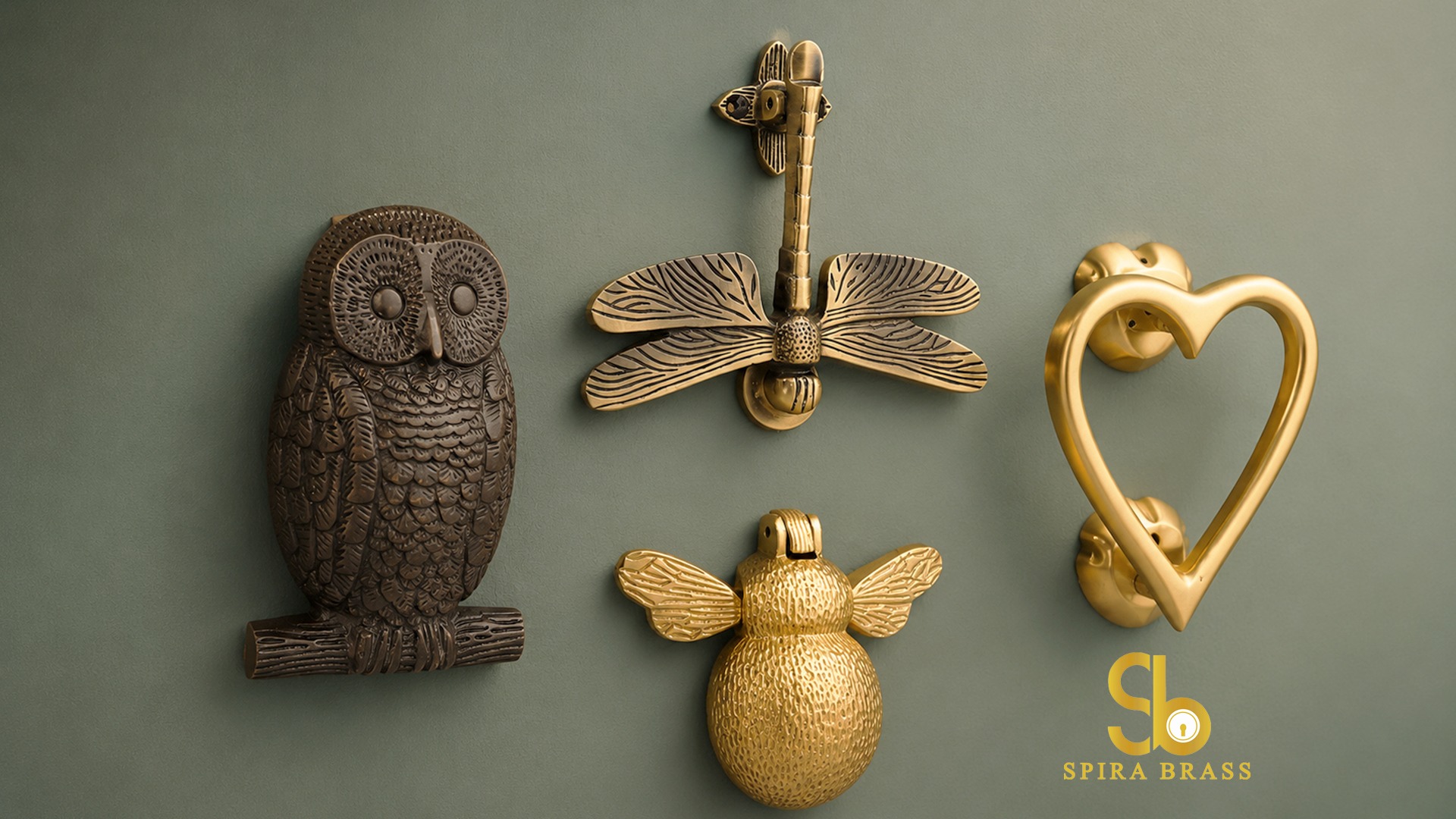
Front Door Hardware Door Knockers - Spira Brass

Indoor hardware never sees UV. That is why a cheap interior handle can look passable for years while the same hardware on a front door looks aged within a season.

What this means for your hardware choice: Finishes like lacquered brass, beeswax coated iron, or black powder coat over zinc-primed iron hold up significantly better under UV than standard plated finishes. They are designed to withstand the conditions your front door actually faces.

Browse our Door Knockers and Centre Door Knobs – finished to endure outdoor exposure without losing their character.

3. Thermal Expansion and Contraction

This one works slowly, but it is relentless. Metal expands when it is warm and contracts when it is cold. Your front door hardware goes through this cycle every single day – warming up in daylight, cooling down at night, and in winter going through more dramatic swings several times across a single day.

Over months and years, this repeated expansion and contraction does real damage. It loosens fixing screws as the metal shifts around them. It cracks thin finishes at the edges where movement concentrates. It stresses the joints between moving parts – particularly in letterplates and door knockers – eventually causing them to loosen, bind, or fail.
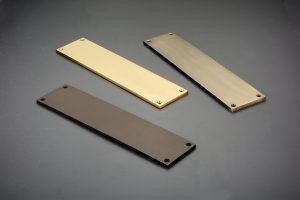
Front Door Hardware Door Plates - Spira Brass

Indoor hardware sits at a relatively stable temperature. It simply does not experience this mechanical stress in the same way.

What this means for your hardware choice: Hardware designed for external use needs thicker metal sections and more robust fixing points that can absorb this movement without working loose. It also needs a finish that has some natural flexibility – which is why beeswax coatings and certain lacquers outperform brittle plated finishes in external conditions.

See our Finger Plates & Letter Plates – built with the mechanical robustness that exterior hardware demands.

4. Salt Air, Pollution, and Airborne Contaminants

If you live near the coast, you already know about salt air. It accelerates corrosion dramatically – what might take three years to develop inland can appear within three months near the sea.

But even well inland, urban air carries pollutants, traffic particulates, and airborne chemicals that settle on exterior surfaces and react with metal finishes. Rain washes some of it off, but also drives some of it into the crevices of your hardware where it continues to react.

Your indoor handles see none of this. The air inside your home is filtered through walls, ceilings, and floors. It is incomparably cleaner than the air your front door hardware breathes all day.
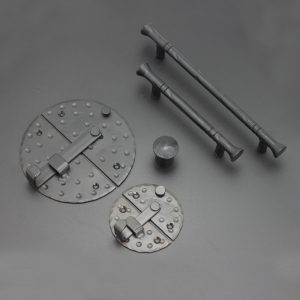
Front Door Hardware Black Smith Range - Spira Brass

What this means for your hardware choice: In coastal or urban environments especially, the base material matters enormously. Solid brass is naturally more corrosion-resistant than most alternatives. Our Blacksmith Range uses a zinc primer coat beneath UV colour fast the black powder coat – specifically to create a barrier against corrosion before the decorative finish is even applied. It is the kind of layered protection that outdoor hardware actually needs.

5. High-Use Mechanical Stress

Your front door is used more than any other door in the house. Every person who visits, every delivery, every time a family member leaves or returns – it all goes through the front door. A busy household might use the front door 20 to 30 times a day.

That means the door knocker gets struck, the letterplate gets pushed, the door knob gets gripped and turned, and the lock gets engaged and released – hundreds of times every week. Under load. In all weathers.

Compare that to a bedroom door handle, which might be used six to ten times on a normal day and sits in still, temperate air in between. The mechanical demand is simply not comparable.

What this means for your hardware choice: Front door hardware needs mechanisms that are engineered for repeated use under real-world conditions – not decorative fittings that look the part but are not built for it. The weight of the fitting, the quality of the internal spring mechanisms, and the robustness of the fixing points all matter far more on a front door than anywhere else in the house.

Explore our full Front Door Security range – made to perform under exactly these conditions.

The Real Problem: Most People Buy Indoor-Grade Hardware for an Outdoor Job

Here is what ties all of the above together. The most common reason front door hardware fails prematurely is not bad luck – it is that people buy hardware rated for interior use and install it in one of the most demanding environments a piece of metal can live in.
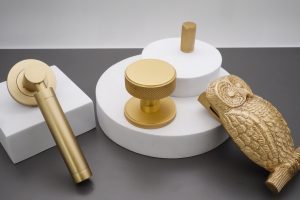
Front Door Hardware - Spira Brass

Many decorative hardware ranges – particularly budget options – are designed, tested, and finished for interior conditions. The plating is thin. The base metal is lightweight. The finish is not UV-stabilised. And the internal mechanisms are not designed to cope with temperature cycling or moisture ingress.

They look identical in the packaging. The difference only becomes apparent after six months on a front door.

What to Look for When Buying Front Door Hardware

Before you buy anything for your front door, ask these questions:

Is the base material solid or hollow? Solid brass and solid iron hold up. Hollow zinc alloy does not – at least not for long.

What is the finish, and is it rated for exterior use? Lacquered brass, black powder coat over zinc primer, beeswax-coated iron, and hot-dip galvanised finishes are genuinely exterior-grade. Thin chrome plate and standard electroplating are not.

Does the product have any external or weather-resistance specification? Quality exterior hardware will state it. If the listing says nothing about outdoor suitability, assume it is not.
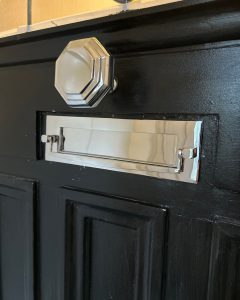
Front Door Hardware - Spira Brass


Are the fixing points substantial? Lightweight backplates with small, closely spaced screw holes will work loose with thermal movement. Look for solid, well-spaced fixing points designed to stay tight.

How Spira Brass Approaches Front Door Hardware

At Spira Brass, we make a clear distinction between what we produce for interior use and what we specify for the front door. Our exterior hardware is finished with protection layers designed for the actual conditions – lacquered coatings on brass collection, zinc primer plus black powder coat on our Blacksmith Range iron products, and beeswax coatings on handforged pieces.

Every product in our front door collection is built to be seen – and to stay looking the way it looked on day one, not just for a season but for years.

You can explore the full range below:

Conclusion

Your front door hardware works harder than any other hardware in your home. It faces rain, UV, salt air, pollution, temperature swings, and daily mechanical use – simultaneously, year round. Indoor hardware simply does not face these conditions.

The solution is not to accept that front door hardware has a short life. It is to choose hardware that is genuinely built for where it is going to live.

Buy for the outside, not for the showroom. Your front door deserves better than hardware that starts failing before winter is out.


Metal hardware are those items in our daily life that we do not really think about, such as door handles, door locks, hinges, cabinet fixtures. They are long-lasting, and even though rust begins to form earlier than one anticipates, it might be frustrating and confusing.

Initially, it can be only a simple stain. However, rust may wear out components, which becomes crude, hard, and unfaithful with time. The only thing about it is that it does not only occur in extreme conditions, but even in normal home conditions.


The Reason Why Metal Hardware Rusts Very Fast

The rust is formed by the combination of metal with moisture and oxygen. Although that is a natural process, there are some daily aspects that accelerate it faster than one would think.

Door Hardware Door Handle, Coat Hook | Spira Brass

1.Moisture is There All the Time.

Rust does not have to be formed in the presence of visible water. Moist air-like conditions particularly in kitchens, bathrooms or during season change- fires up corrosion in the best possible environment. Even dry places have the ability of corroding metal surfaces as time passes.

  1. The Quality of Metal Matters.

Hardware is not all created equal. Poorer-quality metals or items having thin protective layers might appear good in the beginning, however, they deteriorate very fast. When the outer covering wears out or is scratched, the bare metal is very susceptible.

Door Hardware Lever on Rose Door Handle | Spira Brass

  1. Wear is Furnished in Daily Use.

Whenever you open a handle or a lock it undergoes friction. This results in small scratches and wear holes with time. These minor dents enable water to get in to hasten the rusting process, but they are not directly visible.

  1. Environmental Exposure

Noise, pollution, and air quality are also to be considered. Such particles accumulate on the equipment surfaces and when mixed with moisture may accelerate the corrosion process-particularly in urban areas.


The reason Rust Doesn’t Need To Be Forgotten.

Rust may readily be considered as a cosmetic problem but they can be underlying.

  • Products depreciates with time.
  • Movement turns stiff, rough, or noisy
  • Fittings and locks can malfunction.
  • Frequent replacement raises the expenses.

What starts small can quickly affect both performance and reliability.


What You Can Do to Prevent Rust

Although rust cannot be avoided absolutely, there are practical ways to slow it down and protect your decorative items.

Door Hardware Hooks | Spira Brass

  1. Choose Better Materials

The greatest choice is the material itself. There are certain metals that are naturally stronger against corrosion and are lasting longer in use.

  1. Keep Hardware Clean

One should keep cleaning the surfaces regularly before they become damaged through dust and moisture. It is a simple habit that can be observed to have a visible difference as time goes by.

  1. Address Early Signs

In case of dullness, faintest discoloration or roughness, take immediate action. Minor repairs in the early years may eliminate larger problems in later life.

  1. Replace When Needed

At times the issue is not a maintenance problem but rather the hardware. When rust continues to reoccur, it is sometimes more practical in the long term to substitute it with more robust material.


A More Reliable Long Term Approach

When rust continues to appear even after frequent attention, it is usually not a care problem but is more likely to be in the material it is made of. That is the reason why most households and trades are slowly turning towards such high quality materials which are also lacquered and are more sustainable in the long-term.

Metal Hardware Door Knockers | Spira Brass

As compared to low quality metal, the brass and lacquered one does not act in this case on moisture, therefore, it is more resistant to corrosion. It is also durable in most real-life situations, maintains fewer repairs, and does not deteriorate gradually, which is characteristic of the inferior components.


This is the point where our SPIRA BRASS hardware products make the real difference. Our product range is made from high quality material and with an extra protective coated layer on it that made our product weatherproof and long-lasting. Our products are coated with in different protective layers such as lacquered, Beeswax coated, black powder and hot dipped galvanised coated as well. With that our products not only lives longer but also retains its appearance and functionality with an infinitely smaller amount of effort and is therefore a much more secure investment in the long term.


Conclusion

Rust can possibly be an irritating and insignificant thing at first, however, it can also be an indicator of greater problems related to material quality and durability. Simple conditions such as moisture, usage and exposure to the environment may make the metal product wear down unexpectedly.

It is not necessarily always being maintained but making smarter decisions at the very start. Investing in quality materials will lower the risk of rust, increase functionality, and prevent frequent replacement.

Since it does not matter what reliable components is under the skin, at the end of the day, it is about how it works, day by day out.