Mini Cart

Brass has long been admired for its warm golden appearance, timeless appeal, and unique ability to match both modern and traditional interiors. However, if you are someone who has selected unlacquered brass hardware, then you are probably already aware of the fact that it is not something that is covered with a layer of protective lacquer. This also means that the hardware with this finish would not only react with air, with touch and with time; not only that, the bright golden color will slowly turn into a warm, honeyed patina, and that is the same quality that is why it is chosen by so many homeowners, interior designers and architects, but it is the same thing which somehow requires a little more care and cleaning with a slightly different approach than the lacquered one.  

Once you dare to clean it the wrong way, it can strip away all the patina you have been dreaming of developing the whole time to be developed. If you clean it the right way, then you will keep your door hardware looking as it should be: full of aesthetics, character, warmth, and whatnot.  

Here, in this guide, we will explore and learn what exactly you should do to keep your unlacquered brass hardware safe and how often you need to do it.   

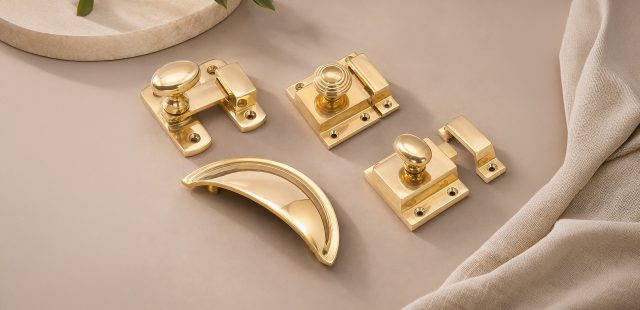
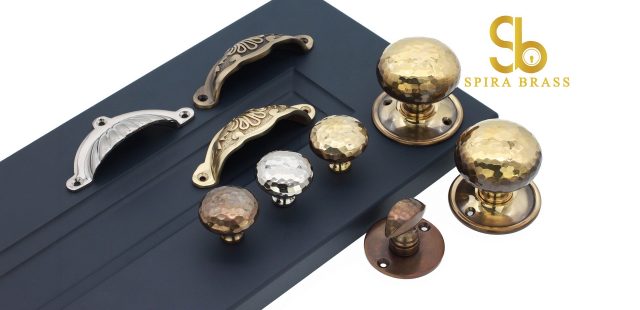
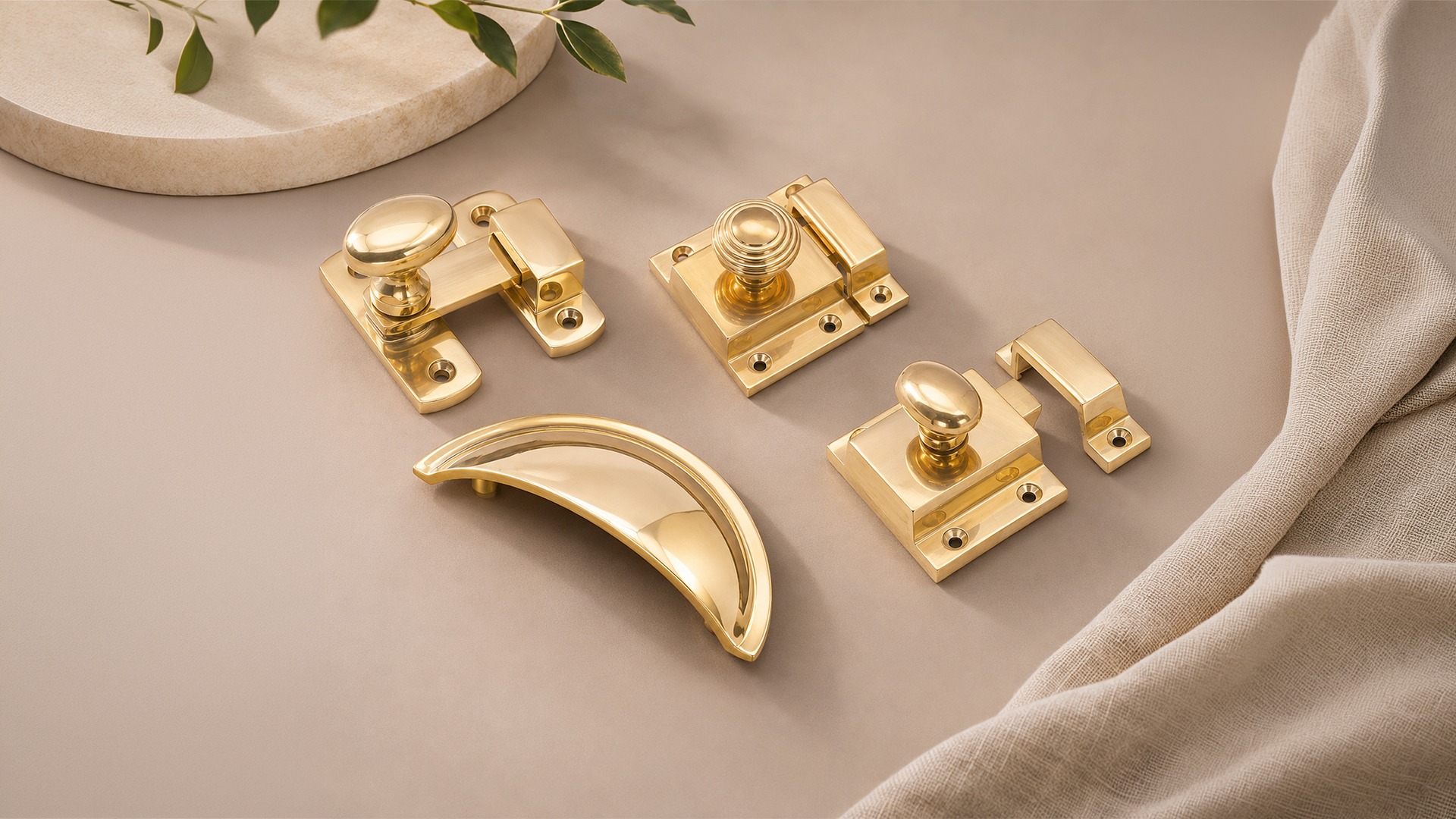
Unlacquered Brass Cupboard Catch

Understanding Unlacquered Brass 

Before picking up a cloth, it helps to understand what you are working with. Brass is an alloy of copper and zinc. Lacquered brass has a clear protective coating that seals the metal from the air, while unlacquered brass is left raw so the metal can develop character naturally. 

Unlacquered brass hardware is so popular in period properties, hotel and modern home. Handle, knob, pull handle, letter plate, knocker and hinge all change slowly through use. Areas that are regularly touched, such as lever handles, remain stay brighter, while less handled areas darken. The end result is a finish that is unique to your homes. 

Because there is no lacquer to protect it, unlacquered brass is also more forgiving than many people realise. Scratches blend into the patina, and the finish can always be refreshed. Unlike coated finishes, it never peels or flakes, and it can be polished back to brightness whenever you wish. 

Why Do They Behave Differently?  

Before cleaning unlacquered brass, it is important to understand what makes it different from other metals.  

As much architectural hardware today has been constructed with a clear coating of lacquer, which keeps the hardware shiny and untarnished for years to come without much maintenance, on the other hand, unlacquered brass is solid brass or brass-plated hardware that does not have any protective layer of lacquer coating. This results in the metal developing a natural patina over time, which is exactly why many people consider this finish in the first place. Not only is this the same finish also available in many other door hardware. 

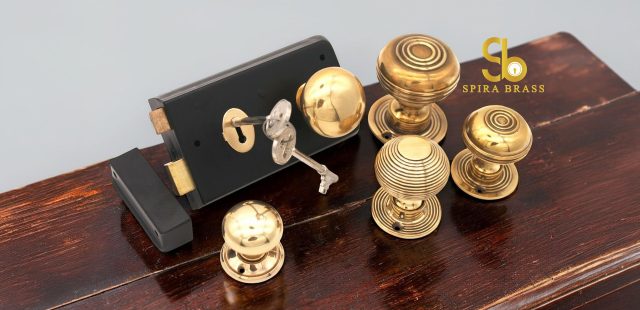
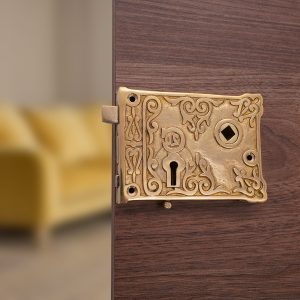
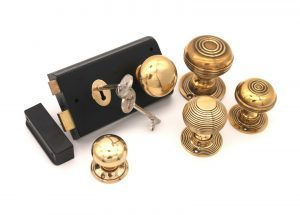
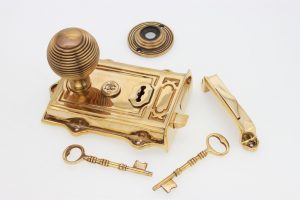
Unlacquered Brass Rim Lock Door Hardware

Step-by-Step: Cleaning Unlacquered Brass Door Handles 

  • Dust and wipe: Remove loose dust and grit with a dry cloth first, so nothing scratches the surface while you clean.
  • Wash gently: Wipe handles and backplates with a soft cloth dampened in warm water and a few drops of washing-up liquid. Use a soft toothbrush around screws and detailing. 
  • Rinse and dry fully: Wipe off soap residue with a damp cloth, then dry immediately with a fresh one. Leftover moisture causes spots and dark patches.
  • Remove tarnish: If it’s still dull, use a brass polish, a lemon and baking soda paste (2 to 3 minutes), or a flour, salt, and vinegar paste (up to 10 minutes). Rinse thoroughly afterwards. 
  • Buff and protect (optional): Buff with a dry microfibre cloth in small circles, then apply a thin coat of wax to slow tarnish. Skip the wax if you prefer a natural patina. 

What to Avoid? 

  • Steel wool or scouring powders. They scratch the surface and leaving permanent marks. 
  • Bleach, ammonia, or harsh cleaners. These can cause discolouration and pitting. 
  • Leaving cleaning pastes on too long. Acids can etch the metal.

You bought what looked like a perfectly good door knocker. A solid letter plate or a beautiful centre knob. They looked great on day one — polished, proud, and exactly what you wanted.
Then six months later, you notice the finish is dull. A year in, there’s discolouration around the edges. Two years on, the knocker has gone patchy, the letter plate stiffens every time it rains, and the knob has lost the look that made you choose it in the first place.
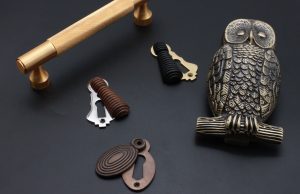
Front Door Hardware - Spira Brass
Sound familiar? You are not imagining it. Front door hardware genuinely does deteriorate faster than indoor hardware — and it is not random bad luck. There are very specific reasons why, and once you understand them, you will never buy exterior hardware the same way again.

The Front Door Is a Completely Different Environment

Here is the thing most people do not think about when they buy front door hardware: that knocker, that letterplate, that door knob — they are essentially living outside. Every single day.
Your indoor door handle sits in a climate-controlled room. It sees a steady temperature, no rain, no UV, no wind-driven grit. It is touched a handful of times a day and otherwise left alone.
Your front door hardware is a different story entirely.

The 5 Reasons Front Door Hardware Fails Faster

1. Rain and Moisture – Every Single Day

n the UK, rain is not an occasional visitor. It is a permanent resident. And every time it rains, your front door hardware gets wet – not just on the surface, but in the joints, around the fixing screws, inside the letterplate flap mechanism, and along the edges where the finish is thinnest.

Water finds its way into every gap. And when it sits in those gaps – even briefly – it begins the process of corrosion from the inside out. The outside of the hardware may still look acceptable while the mechanism inside is already rusting, stiffening, or weakening.

This is why a letterplate that opens smoothly in summer can feel stiff and resistant by winter. It is not the cold – it is accumulated moisture damage that has been building since the day it was installed.

What this means for your hardware choice: Any front door fitting needs to be made from a material that resists moisture at its core – not just coated on the outside. Solid brass, lacquered brass, and hot-dip galvanised iron are materials that handle moisture far better than thin-plated zinc alloys or hollow chrome fittings.

Explore our Front Door Hardware range – designed and finished specifically for external conditions.

2. UV Exposure – The Silent Finish Killer

Most people are surprised by this one. UV light from the sun is one of the most aggressive enemies of surface finishes – and your front door faces it directly, often for hours every day.

UV rays break down the molecular structure of lacquers, powder coatings, and plated finishes over time. The result is fading, chalking, and a patchy, bleached-out appearance – particularly on south and west-facing doors that get the most direct sun.
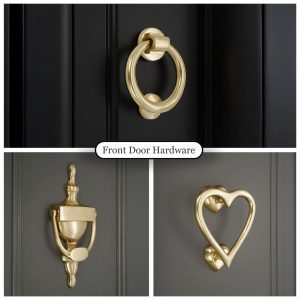
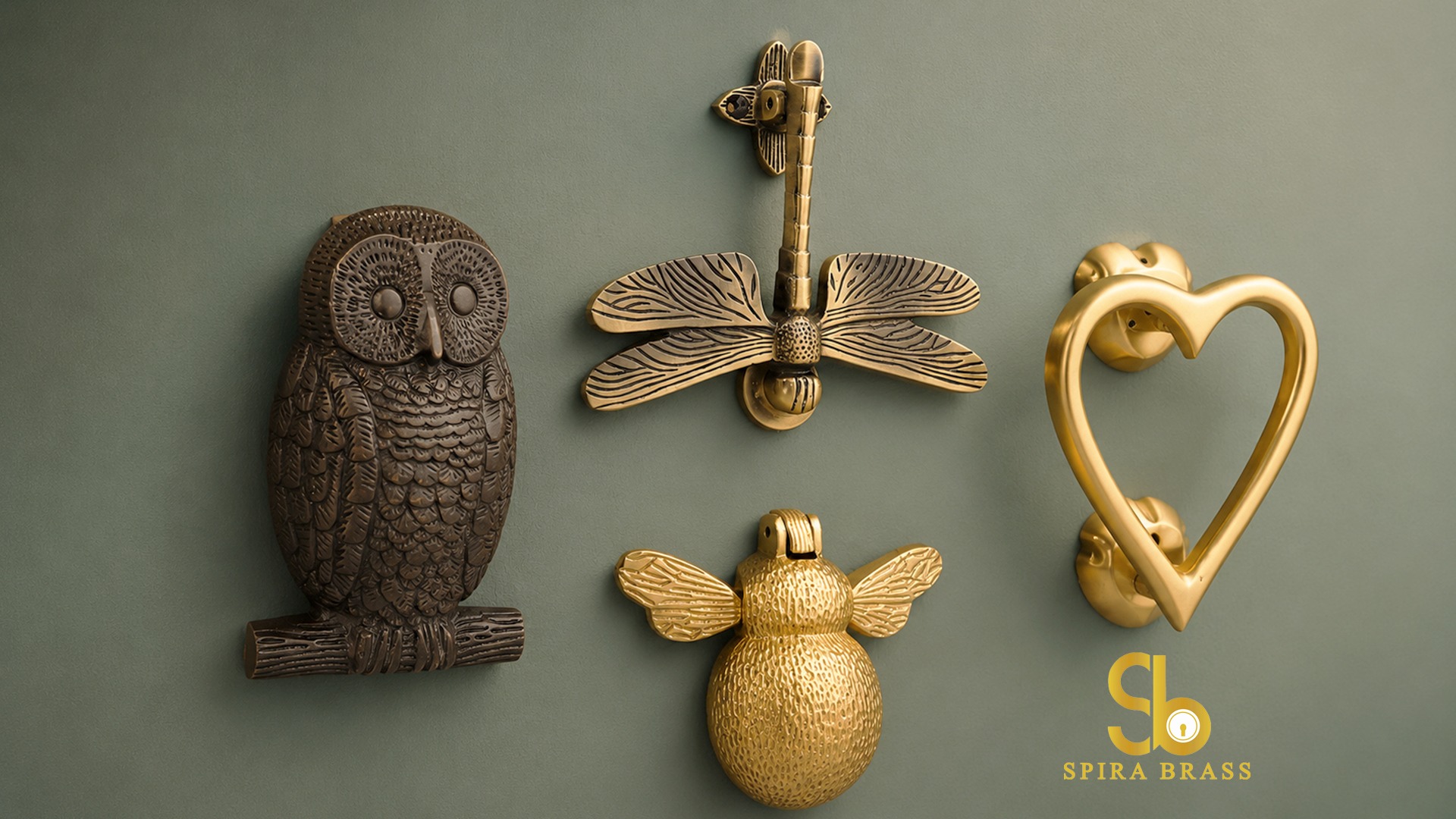
Front Door Hardware Door Knockers - Spira Brass

Indoor hardware never sees UV. That is why a cheap interior handle can look passable for years while the same hardware on a front door looks aged within a season.

What this means for your hardware choice: Finishes like lacquered brass, beeswax coated iron, or black powder coat over zinc-primed iron hold up significantly better under UV than standard plated finishes. They are designed to withstand the conditions your front door actually faces.

Browse our Door Knockers and Centre Door Knobs – finished to endure outdoor exposure without losing their character.

3. Thermal Expansion and Contraction

This one works slowly, but it is relentless. Metal expands when it is warm and contracts when it is cold. Your front door hardware goes through this cycle every single day – warming up in daylight, cooling down at night, and in winter going through more dramatic swings several times across a single day.

Over months and years, this repeated expansion and contraction does real damage. It loosens fixing screws as the metal shifts around them. It cracks thin finishes at the edges where movement concentrates. It stresses the joints between moving parts – particularly in letterplates and door knockers – eventually causing them to loosen, bind, or fail.
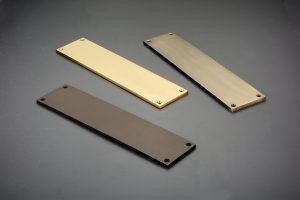
Front Door Hardware Door Plates - Spira Brass

Indoor hardware sits at a relatively stable temperature. It simply does not experience this mechanical stress in the same way.

What this means for your hardware choice: Hardware designed for external use needs thicker metal sections and more robust fixing points that can absorb this movement without working loose. It also needs a finish that has some natural flexibility – which is why beeswax coatings and certain lacquers outperform brittle plated finishes in external conditions.

See our Finger Plates & Letter Plates – built with the mechanical robustness that exterior hardware demands.

4. Salt Air, Pollution, and Airborne Contaminants

If you live near the coast, you already know about salt air. It accelerates corrosion dramatically – what might take three years to develop inland can appear within three months near the sea.

But even well inland, urban air carries pollutants, traffic particulates, and airborne chemicals that settle on exterior surfaces and react with metal finishes. Rain washes some of it off, but also drives some of it into the crevices of your hardware where it continues to react.

Your indoor handles see none of this. The air inside your home is filtered through walls, ceilings, and floors. It is incomparably cleaner than the air your front door hardware breathes all day.
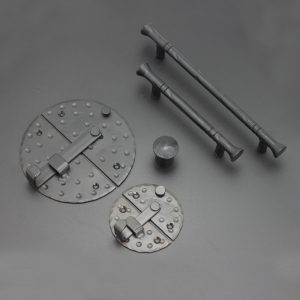
Front Door Hardware Black Smith Range - Spira Brass

What this means for your hardware choice: In coastal or urban environments especially, the base material matters enormously. Solid brass is naturally more corrosion-resistant than most alternatives. Our Blacksmith Range uses a zinc primer coat beneath UV colour fast the black powder coat – specifically to create a barrier against corrosion before the decorative finish is even applied. It is the kind of layered protection that outdoor hardware actually needs.

5. High-Use Mechanical Stress

Your front door is used more than any other door in the house. Every person who visits, every delivery, every time a family member leaves or returns – it all goes through the front door. A busy household might use the front door 20 to 30 times a day.

That means the door knocker gets struck, the letterplate gets pushed, the door knob gets gripped and turned, and the lock gets engaged and released – hundreds of times every week. Under load. In all weathers.

Compare that to a bedroom door handle, which might be used six to ten times on a normal day and sits in still, temperate air in between. The mechanical demand is simply not comparable.

What this means for your hardware choice: Front door hardware needs mechanisms that are engineered for repeated use under real-world conditions – not decorative fittings that look the part but are not built for it. The weight of the fitting, the quality of the internal spring mechanisms, and the robustness of the fixing points all matter far more on a front door than anywhere else in the house.

Explore our full Front Door Security range – made to perform under exactly these conditions.

The Real Problem: Most People Buy Indoor-Grade Hardware for an Outdoor Job

Here is what ties all of the above together. The most common reason front door hardware fails prematurely is not bad luck – it is that people buy hardware rated for interior use and install it in one of the most demanding environments a piece of metal can live in.
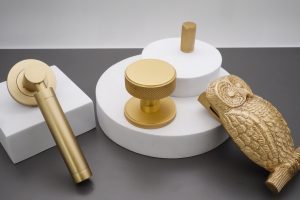
Front Door Hardware - Spira Brass

Many decorative hardware ranges – particularly budget options – are designed, tested, and finished for interior conditions. The plating is thin. The base metal is lightweight. The finish is not UV-stabilised. And the internal mechanisms are not designed to cope with temperature cycling or moisture ingress.

They look identical in the packaging. The difference only becomes apparent after six months on a front door.

What to Look for When Buying Front Door Hardware

Before you buy anything for your front door, ask these questions:

Is the base material solid or hollow? Solid brass and solid iron hold up. Hollow zinc alloy does not – at least not for long.

What is the finish, and is it rated for exterior use? Lacquered brass, black powder coat over zinc primer, beeswax-coated iron, and hot-dip galvanised finishes are genuinely exterior-grade. Thin chrome plate and standard electroplating are not.

Does the product have any external or weather-resistance specification? Quality exterior hardware will state it. If the listing says nothing about outdoor suitability, assume it is not.
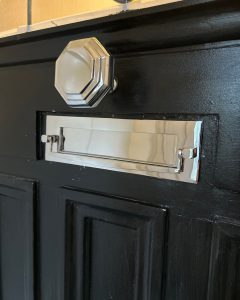
Front Door Hardware - Spira Brass


Are the fixing points substantial? Lightweight backplates with small, closely spaced screw holes will work loose with thermal movement. Look for solid, well-spaced fixing points designed to stay tight.

How Spira Brass Approaches Front Door Hardware

At Spira Brass, we make a clear distinction between what we produce for interior use and what we specify for the front door. Our exterior hardware is finished with protection layers designed for the actual conditions – lacquered coatings on brass collection, zinc primer plus black powder coat on our Blacksmith Range iron products, and beeswax coatings on handforged pieces.

Every product in our front door collection is built to be seen – and to stay looking the way it looked on day one, not just for a season but for years.

You can explore the full range below:

Conclusion

Your front door hardware works harder than any other hardware in your home. It faces rain, UV, salt air, pollution, temperature swings, and daily mechanical use – simultaneously, year round. Indoor hardware simply does not face these conditions.

The solution is not to accept that front door hardware has a short life. It is to choose hardware that is genuinely built for where it is going to live.

Buy for the outside, not for the showroom. Your front door deserves better than hardware that starts failing before winter is out.


We all do it. You arrive at the front door carrying your shopping, and you elbow the handle down or kick it a little at the bottom. It seems harmless enough. However, here is the point- those little daily routines are stealing years out of the life of your door handles. 

Door Hardware Door and cabinet accessories | Spira Brass

So whether you have spent up on beautiful door handles, solid brass door knobs or good architectural ironmongery, it does matter how you handle your hardware on a day-to-day basis. The good news? The majority of the damage is totally preventable, and you just need to know what to watch out on. 

And now we will pass through the most frequent offenders. 


Application of Harsh Cleaning Products on Hardware 

That is likely the most common error that the owners of the homes make concerning the maintenance of the door hardware. It is just logical – pick the same multi-purpose spray you apply on the worktops in the kitchen and wipe the handle. Job done, right? 

Door Hardware Handles | Spira Brass

Wrong. All domestic cleaners are bleach, ammonia or strong acid which is extremely nasty on brass and other metal finishes. Gradually these chemicals cause the protective lacquer on your door handles, which is made of brass, to be dull and rough and liable to tarnishing. What began as a shiny lever handle, might be seen in a few months to be worn and rusted. 

The solution is simple, a soft damp cloth and mild solution of soap should be used, as is necessary. In case of unlacquered metal, the trick is in a specialist metal cleaner that is applied sparingly. It is always important to dry the hardware well after, standing moisture is also another silent killer of good door hardware. 

Over-Tightening Screws on Hinges and Backplates 

When a hinge or a backplate is a little loose, the desire is to pick up a screwdriver and fasten everything as tight as you can. It appears to be accountable, even DIY-loving. Damage of door hinges and of the timber surrounding them is, however, one of the most common causes by over-tightening. 

By making sure that you over tighten screws, you squeeze and tear the fibers of wood behind the screws, that is, the screws no longer have anything to hold them after some time and the fittings slip off even quicker. The backplate itself can be broken or bent, too– especially by using thinner architectural hardware– or stripped of the screw heads, so that they become impossible to remove in the future. 

Door Hardware Door Hinges | Spira Brass

The correct method is to press hard and soft, tighten up until no movement is seen and then cease. When screws continue to loosen, the problem would be with the timber, but not the hardware. It is an old bit of joiner-trick to put in a couple of wooden matchsticks dipped into wood glue, into the screw-hole. 

Ignoring Stiff or Squeaky Handles and Hinges 

We have all had a squeaky hinge or a handle that requires a good heave to do the job. It turns into background music– something that you intend to clear up but you just never manage to do it. It is due to this reason that you should not leave it. 

A lever handle or door knob that can be felt as stiff is generally a sign that the internal mechanism – the sprung return – is becoming worn or dry. Each time you press a stiff handle, you are preventing the spindle and internal mechanisms against the needless pressure. And when left long enough, this will result in a complete break down of the mechanism, and the only way of putting it back on track is to completely replace the fitting, and not to smear a small portion of lubricant over it. 

Door Hardware Door Hinges | Spira Brass

The same thing can be said about squeaky hinges, which are dry and could be out of place. A drop of WD-40 or any lubricant silicone oil on the hinge pin is a long way. It is time to make it an annual home maintenance activity and you will be glad you did. 

Slamming Doors- More Damaging Than You Think. 

Hardware Door slamming action is same as speed bump driving at 40mph. The impulse shock regularly passes the vibration in all the parts, the latch, the lock, the hinges, the escutcheons, and the backplates. Months and years loosen this and bend the mechanisms and even break the rose plate on the more frail architectural door handles. 

The chief offenders are children and draughts. Door closers or soft-close buffers are an excellent investment – they not only help to save your hardware, but also the harmony at home. 


Not Observe the Keyhole and Locking Mechanism 

The majority of the population merely pays attention to their lock when it ceases to operate, and this is the same as just paying attention to your car engine when it runs out. The moving parts of mortice locks, rim locks, and latches require periodic lubrication in order to operate effectively. 
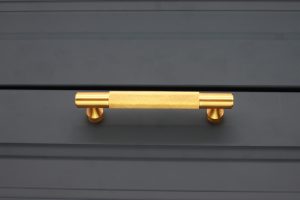
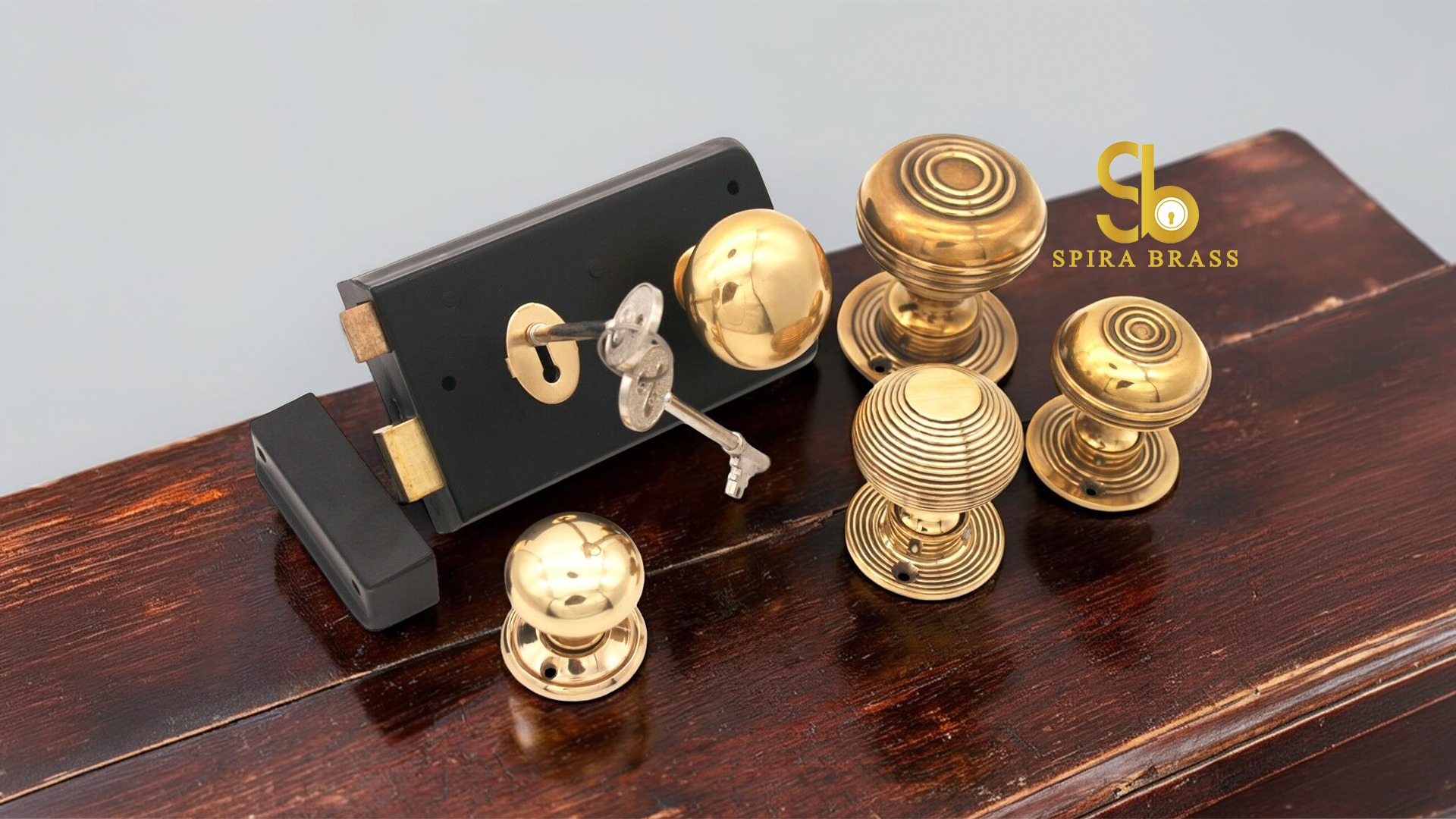
Door Hardware Knobs & Rim Lock | Spira Brass

Any hard pressing of the key, or harsh tugging at an unwilling latch is the surest method of bending the key, ruining the lock barrel, or completely cutting the latch mechanism open. A lubricating paint made out of graphite is rubbed directly inside the keyhole every one or two times in a year to ensure that everything runs smoothly. Oil based products should not be used in locks because they attract dust and gum up in the long run. 


Letting Condensation and Moisture Sit on Hardware 

Damp, we know about damp in UK. Yet when we are taking all this time worrying about damp on walls, the hardware on our front doors and the doors to our bath rooms is soaking and soaking without any sound. The condensation as well as the rain splash and steam in the bathrooms can also find their way into the joints and fixing of door hardware and cause corrosion, tarnishing and stiffening mechanisms. 

The front door hardware is particularly exposed. In case you observe the presence of water around your door knocker, letterplate or door knob when it rains, have a wipe down. It is just a moment and it really counts to the life of your door furniture. 


A Little Care Goes a Long Way 

Good architectural hardware – a gracefully made door handle, or a hand-weld hinge of iron, or a vintage mortice door knob – is designed to take decades to wear out. But it does require a lending of your hand. 

Replace the rough cleaners with the soft ones. Lubricate once a year. Wipe down after wet weather. Don’t force stiff mechanisms. These little practices do not consume hours but save your investment in years. 

At Spira Brass, we are producing and selling quality architectural hardware, which is meant to be able to withstand the test of time comes with high quality premium protective coating which gives you a hassle-free usage experience no tension of maintenance for a long period. You can also find our entire selection of door handles, door knobs, hinges, locks and front door hardware at Spira Brass. 


Small elements are frequently the ones that make the largest difference when it comes to detailing the style, comfort, and long-term viability of your home decor hardware. Devices and parts such as door handles, knobs, rim locks, sash locks, cabinet fittings and decorative embellishments may appear like tiny pieces of your home — they are, nonetheless, the things that are physically handled, used and rely upon every single day. The selection of the right hardware is not simply a means of your home’s aesthetic getting better, it is also a way of providing safety, solidity, and long-lasting worth.  

Our motive at Spira Brass is very clear – “good hardware makes your home good” —hardware that is made with preciseness, good quality metals, and is focused to serve seamless functioning for a long time. Regardless of whether you are constructing your dream home of your life or merely doing some refurbishment work, below are the points that you need to consider before buying any product for your home decor hardware. 

Hooks of different types


1.    Base Material : The Foundation of Great Hardware

The material used in the product is what decides the product’s strength, life, and look. To illustrate, hardware produced from pure brass is durable, has good resistance to rust, and offers a nice touch type product. Unlike lesser alloys or hollow metals, solid brass changes its look with time and keeps its strength during the whole period. You can check our different materials range products below :-


2.    Quality of Finish & Ageing

The finish is very much apart from being just a colour; it is also a factor in how the product slowly ages. An excellent finish guards the hardware from different agents such as moisture, and also from various factors like tarnish, scratches, and wear that is done on a daily basis by the user.

Common finishes include:

      • Aged Brass – is a warm, vintage patina that intensifies over time.
      • Polished nickel – is a trendy and attractive finish.
      • Satin Brass – is characterized with a moderate shine and a luxurious soft-gold tone
      • Black Matt – bold, minimalist, and versatile

Different types of door knobs.

It is a good idea to ensure that the finish is treated, lacquered, or specially coated so that it is not easily worn out or chipped. Spira Brass items are made using premium finishing techniques that help to maintain the color, and also that are resistant to wear and tear for a long time.

      • Stainless steel is resistant to corrosion.
      • Cast iron for classic beauty and durable strength.

Spira Brass uses pure and solid-grade materials to ensure that each handle, knob, lock, or fitting has a substantial feel while also lasting for decades.

Check out our hardware decor products available in all finishes below –


3.    Design Compatibility with Your Home

In no way should hardware overshadow your interiors, rather it should blend with them. Prior to purchasing any hardware decor, you should think of:

      • The overall theme — modern, classic, industrial, vintage, or transitional
      • The colour tones in your home — warm metals vs. cool metals
      • The profile of the hardware — sleek, ornate, minimalist, or rustic

Utilizing good hardware can bring the different elements of your home such as door frames, furniture, cabinetry, and decor together and thus achieve harmony. This is the reason why Spira Brass has a wide array of design concepts from beehive patterns and antique silhouettes to contemporary minimal forms, thus ensuring the perfect match for every home ‍style.


4.    Functionality & Smooth Operation

An attractive handle or lock has no value if it does not work properly. Always check:

      • The comfort of the grip of door handles
      • The ease of latch or lock operation
      • Mechanisms without clicking or other noises
      • The firmness of screws and fittings

Door knocker, escutcheon, handle

Hardware should be solid, smooth, and easy every time you use it. Spira Brass items are subjected to rigorous quality control to guarantee accuracy of engineering, smoothness of spring mechanisms, and efficient locking functions.


5.    Installation Compatibility

Hardware comes in different types and sizes. So here are the points to check the compatibility :

      • The thickness of the door
      • Lock type (mortice lock, rim lock, tubular latch, etc.).
      • Backplate dimensions
      • Screw spacing
      • Handing (left or right door swing)

Door handles, sash locks, thumbturns

Most of Spira Brass products are designed to be universally compatible, thus making installation simple for both professional and DIY.


6.    Safety & Security Features

For instance, the safety of locks ought to be a major concern at most times. You can evaluate that by:

      • Checking the material thickness
      • Evaluating the lock body strength
      • Assessing the quality of the locking mechanism
      • Figuring out if the structure is resistant to force

Good quality made from solid metals, such as rim locks and sash locks, give your house a higher degree of safety. With a combination of strong construction and attractive features, Spira Brass rim locks offer security as well as style to you.


7.    Weather Resistance for Outdoor Use

When selecting hardware for doors that are outside, gates or even outdoor furniture, buying items that provide the following features is a wise decision:

      • Resistance to rust
      • Protection against ultraviolet
      • Treatments that resist water
      • Anti-corrosion components

Pure brass and properly coated metals are perfect for hardware that will be placed outside. There are numerous products of Spira Brass that are manufactured to be both interior and exterior condition compatible, thus providing versatile installation options.

Beehive door knob, thumbturn, escutcheon


8.    Ease of Maintenance

The best hardware not only look good after installation but they also can maintain their beauty with little or no help. You should be looking for:

      • Fingerprints-resistant lacquered finishes
      • Metals that are naturally corrosion-resistant
      • Products that are simple for cleaning

The goal of Spira Brass finishing is to provide a long-lasting shine with minimum cleaning, thus they are the perfect choice for households with a busy lifestyle.


9.    Brand Trust & Craftsmanship

The hardware used for house decor is an investment and a great brand is the key to a reliable product. A manufacturer that can be trusted:

      • Lets a product be made out of superior materials
      • Tests it extensively
      • Maintains high standards consistently
      • Implements the brand promise through artisan skills

Beehive door knob

One of the times honored traits, artisan skill is the hallmark of Spira brass, where time-tested methods meet contemporary standards to yield not only stylish, durable, and premium-looking but high-performing end products also.


10.    Value for Money

In hardware, the cheapest option is hardly ever the best. Besides that, you shouldn’t put your focus only on money but also consider:

      • Product lifetime
      • Quality of the finishing
      • Solid construction
      • Design uniqueness

By putting a little more money into good hardware, you will be saved from replacements, repairs, and dissatisfaction for a long time to come. Spira Brass items are not only good as to quality but also reasonable as to price, thus providing value in the long ‍run.

Door handles of dual tones.


The hardware in your house is the part of the decor that is interacted with, noticed, and relied upon every day. Aesthetic-wise, the trendy set of door handles, knobs, locks, and other accessories you add to the place will brighten the home not to mention increase its comfort, safety, and longevity as well.

Spira Brass wants to be the supplier of hardware that connects classic design with strong functional features—elegant to update your area and sturdy to keep forever. That’s why selecting the right hardware equates to making the right decision for your home.

It can be said that most houses in the UK be they old stone cottages, Victorian town houses, and even modern flats have brass that can be easily sighted. They could be the cupboard knob used daily, the letter box used every day to receive the post, or the door knob that elegantly sways and swings. Over the years, brass has integrated into homes and has combination, in modern homes, and has somehow, never gone out of style. It is a link to the past.

A Link to the Past

Brass has always been regarded as warm in colour and strong, even in the hands of history. Which is more reason the material has come to be used and integrated in homes that are Georgian and Victorian. Nowadays, should one stumble upon an old property, restoring it fully and integrating fitting brass is almost an instinct. In more modern homes, brass fittings integrally are used to give depth and character. It is one of the few things that can be said to literally be in modern homes. Tough enough for daily life. Proper solid brass, or just thick size, can easily be said to last for more than just years of daily usage and be said to be an even more reason to say that it is well preserved.

Unlike other metals, the attractiveness of brass never declines, as it develops special type of layer on the metal. This in turn, gives it a richness of a much more enduring appeal. It complements all styles. With its many forms, brass can be said to be a bit of a shapeshifter. With a deeper form of attractiveness, antique and aged brass works beautifully in rustic spaces. No other form of metals rests comfortably after a work day in a modern form other than satin and matte finishes. In other words, no matter the place or the home, there is bound to be a form or version of it that fits the needs. It is the little things that matter. The little as aspects brass gives is often hard to be noticed, but goes a long with a warm and subtle touch. Such bits are knobs, door handle, or a heavy-weighted knocker – and the very highlights of life which brass gives durability and structured warmness without being a centre of attraction. Brass is also very easy to maintain as it has a long-life expectancy.lock

Less waste is generated which translates to not having to purchase low quality fittings every now and then. In addition, if ever needed, brass can be recycled. In a way, it respects both the home and the planet. Brass is not about following the latest fashion. It is masterful, enduring, warm, and of a quality that is timeless. It is the reason why UK homes show persistent preference for the product. At Spira, we love carrying that tradition forward-creating pieces of hardware that resonate with the present and will still be relevant many decades from now.

Strength That Grows with Time

Today people are aware of what they bring into their home. What may pass as cheap at first may only last a short while before it ends up in the trash. With brass however it is different, it is a material that stands the test of time. It is strong and reliable and at the end of its life, it is a material that can be recycled. What we choose in brass is a choice that goes beyond style it is a decision which out of respect we are making for our home and the environment.

Solid brass hinges do very well for decades. As for a knocker or letter plate they weather rain, frost, and sun without failure. Also, they do not wear out from years of use instead they transform. They develop a soft dark tone which only adds to their appeal. Each mark tells you that it has been a part of the home’s story and people do in fact treasure that. It is a material for every mood. It is that friend which goes with anything. Want depth and a touch of the past? Antique brass is what you want for that worn in; heritage look. Prefer modern and a little more subdued? Satin or antique brass will fit into present day settings. We are not into trends or trying to be the trend setter; we are into what is classic and does the job well which also happens to look good. That is what has made it a constant in our lives.

At Spira Brass, we are carrying that tradition forward. Each handle, hinge, and knocker is a work of art which also keeps in mind the home it will be a part of. It is not just about the function of opening a door, it is about creating a home that is solid, enduring and welcoming for the long term.

Sign Up Newsletter

Sign up our newsletter and save 25% off for the next purchase!

Subscribe to our newsletters and don’t miss new arrivals, the latest fashion updates and our promotions.