Mini Cart

Brass has long been admired for its warm golden appearance, timeless appeal, and unique ability to match both modern and traditional interiors. However, if you are someone who has selected unlacquered brass hardware, then you are probably already aware of the fact that it is not something that is covered with a layer of protective lacquer. This also means that the hardware with this finish would not only react with air, with touch and with time; not only that, the bright golden color will slowly turn into a warm, honeyed patina, and that is the same quality that is why it is chosen by so many homeowners, interior designers and architects, but it is the same thing which somehow requires a little more care and cleaning with a slightly different approach than the lacquered one.  

Once you dare to clean it the wrong way, it can strip away all the patina you have been dreaming of developing the whole time to be developed. If you clean it the right way, then you will keep your door hardware looking as it should be: full of aesthetics, character, warmth, and whatnot.  

Here, in this guide, we will explore and learn what exactly you should do to keep your unlacquered brass hardware safe and how often you need to do it.   

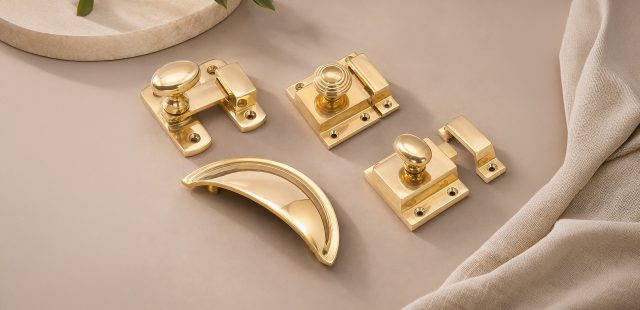
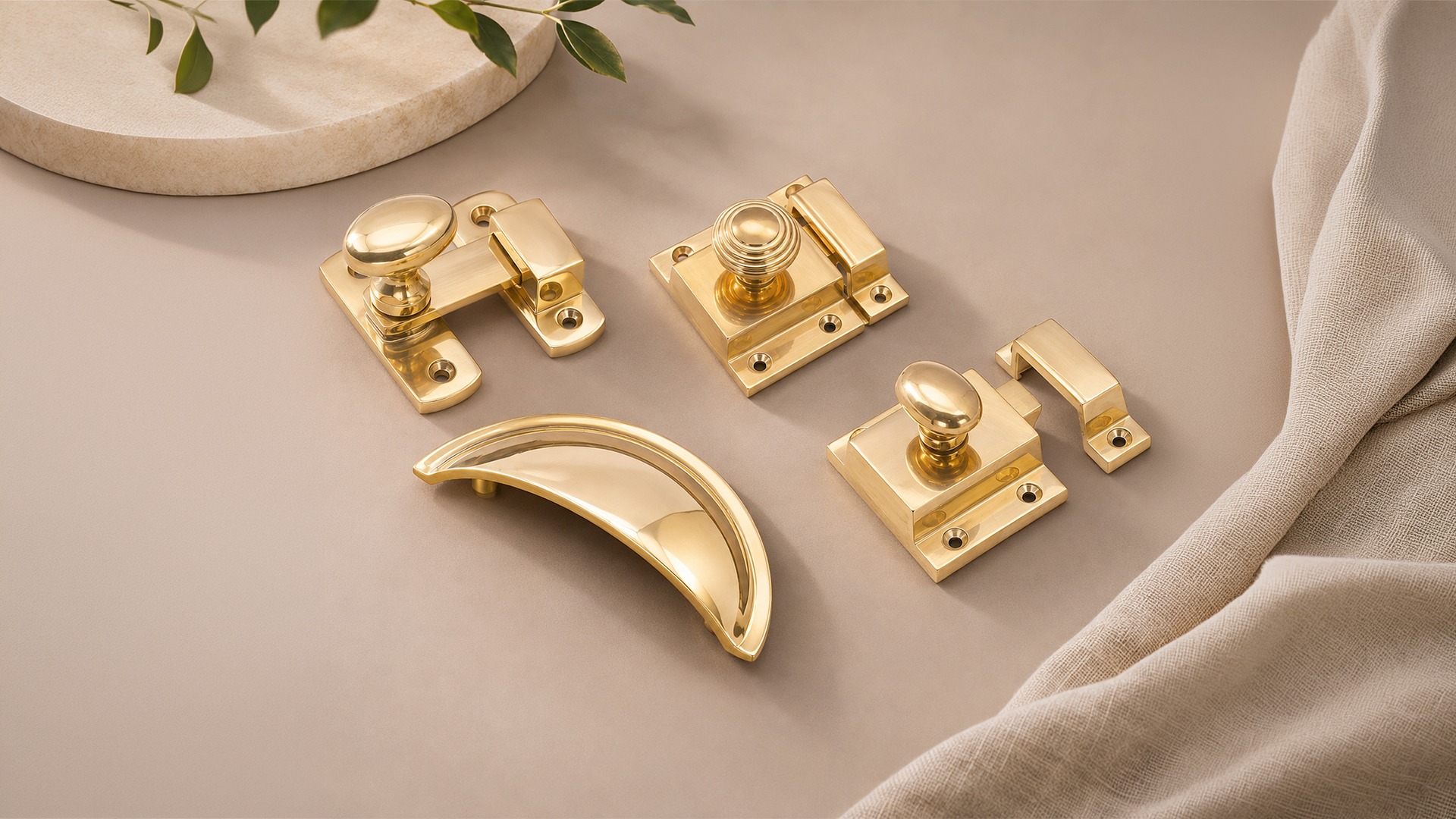
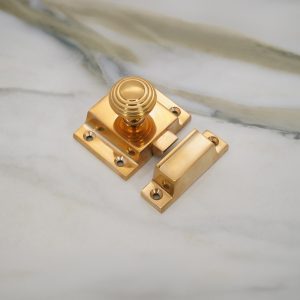
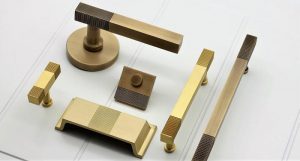
Unlacquered Brass Cupboard Catch

Understanding Unlacquered Brass 

Before picking up a cloth, it helps to understand what you are working with. Brass is an alloy of copper and zinc. Lacquered brass has a clear protective coating that seals the metal from the air, while unlacquered brass is left raw so the metal can develop character naturally. 

Unlacquered brass hardware is so popular in period properties, hotel and modern home. Handle, knob, pull handle, letter plate, knocker and hinge all change slowly through use. Areas that are regularly touched, such as lever handles, remain stay brighter, while less handled areas darken. The end result is a finish that is unique to your homes. 

Because there is no lacquer to protect it, unlacquered brass is also more forgiving than many people realise. Scratches blend into the patina, and the finish can always be refreshed. Unlike coated finishes, it never peels or flakes, and it can be polished back to brightness whenever you wish. 

Why Do They Behave Differently?  

Before cleaning unlacquered brass, it is important to understand what makes it different from other metals.  

As much architectural hardware today has been constructed with a clear coating of lacquer, which keeps the hardware shiny and untarnished for years to come without much maintenance, on the other hand, unlacquered brass is solid brass or brass-plated hardware that does not have any protective layer of lacquer coating. This results in the metal developing a natural patina over time, which is exactly why many people consider this finish in the first place. Not only is this the same finish also available in many other door hardware. 

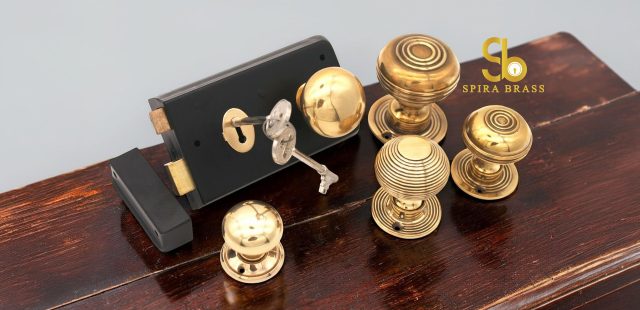
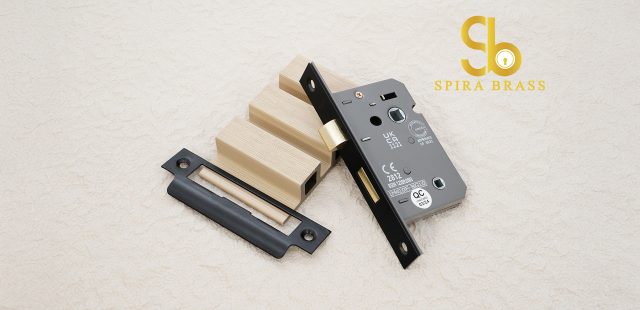
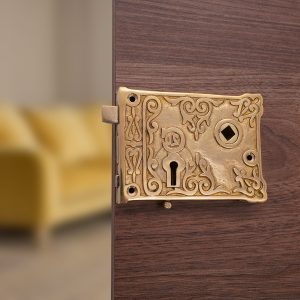
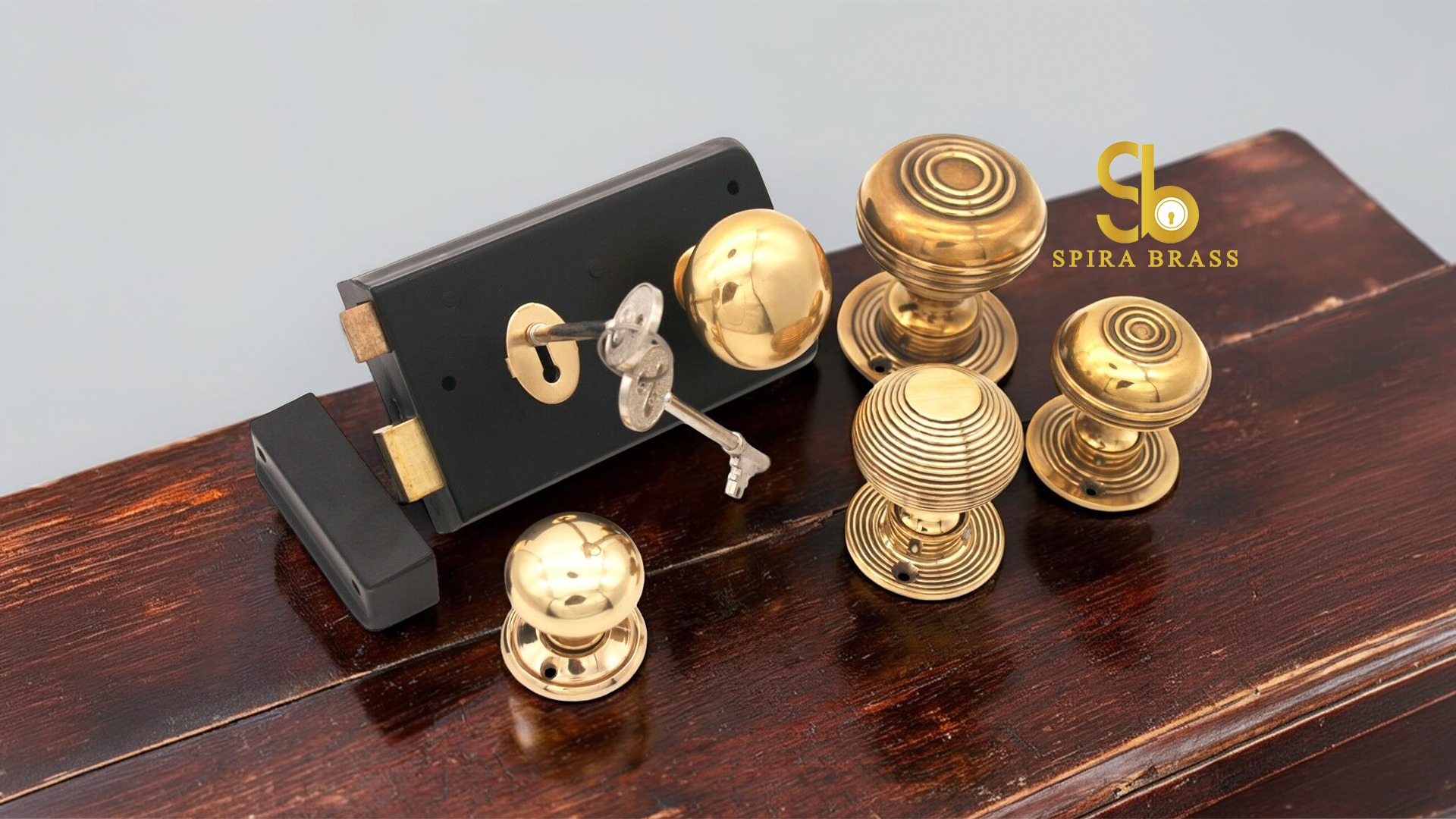
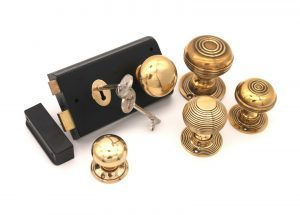
Unlacquered Brass Rim Lock Door Hardware

Step-by-Step: Cleaning Unlacquered Brass Door Handles 

  • Dust and wipe: Remove loose dust and grit with a dry cloth first, so nothing scratches the surface while you clean.
  • Wash gently: Wipe handles and backplates with a soft cloth dampened in warm water and a few drops of washing-up liquid. Use a soft toothbrush around screws and detailing. 
  • Rinse and dry fully: Wipe off soap residue with a damp cloth, then dry immediately with a fresh one. Leftover moisture causes spots and dark patches.
  • Remove tarnish: If it’s still dull, use a brass polish, a lemon and baking soda paste (2 to 3 minutes), or a flour, salt, and vinegar paste (up to 10 minutes). Rinse thoroughly afterwards. 
  • Buff and protect (optional): Buff with a dry microfibre cloth in small circles, then apply a thin coat of wax to slow tarnish. Skip the wax if you prefer a natural patina. 

What to Avoid? 

  • Steel wool or scouring powders. They scratch the surface and leaving permanent marks. 
  • Bleach, ammonia, or harsh cleaners. These can cause discolouration and pitting. 
  • Leaving cleaning pastes on too long. Acids can etch the metal.

There is a particular kind of frustration that comes from revisiting a project two years after handover. Everything looks right –  the colors have settled, the furniture is worn nicely, the client has made it their own. And then your eye lands on the door handle. The finish has gone flat or worse, patchy. And you remember making that specification in a hurry because the budget was tight or the deadline was close. 

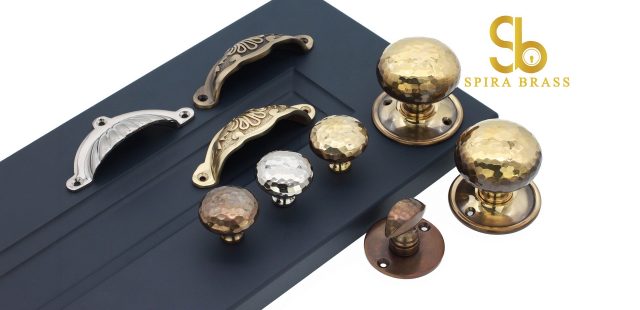
Cupboard Pulls Door Hardware | Spira Brass

Finish selection does not get talked about enough in design circles. Everyone has opinions on paint, on fabric, on flooring. Hardware finishes tend to get picked late in the process, often under pressure, and that is exactly when the wrong calls get made. This is a checklist I wish someone had handed me earlier – not a catalogue rundown, but an honest look at what performs, what demands more of your client than they signed up for, and what to specify when the brief pulls in different directions. 

Polished Brass: Commit to It or Leave It Alone 

Polished brass is genuinely beautiful and genuinely demanding. There is no middle ground with it. 

The unlacquered version – which is the one worth specifying if you want real depth and character – will shift over time. Heavy contact areas go lighter. Low-traffic surfaces darken. That slow evolution is either the whole point or a complete nightmare, depending on the client sitting across from you. Before you put it on a schedule, have that conversation. Some clients will love the idea of hardware that develops a story. Others will ring you in eight months asking why their handles look uneven. 

Lacquered polished brass holds its look longer and needs nothing more than a soft cloth. You lose some of the warmth and depth but you gain predictability. For clients who entertain a lot, have young children, or simply want things to look the same in five years as they did on day one – lacquered is the honest recommendation. 

Where polished brass really earns its place is in schemes with marble, dark painted joinery, or raw stone. The warmth it brings into those environments is hard to replicate with anything else. 


Aged Brass: The One That Does the Work Quietly 

If I could only specify one finish across a broad range of residential projects, aged brass would be a serious contender. 

It arrives already looking like it has been there a while, which on any period or heritage project is an enormous advantage. The recessed areas are darker, the raised surfaces catch the light – and because it already looks lived in, it continues to look right as actual use adds to that story. Fingerprints do not show the way they do on polished surfaces. It does not need polishing. It does not react dramatically to condensation or humidity. 

The aged brass range at Spira Brass works particularly well on country houses, older cottages, and any project where the client has used warm neutrals, natural textiles and reclaimed or heavily grained timber. It does not fight the materials around it. It just sits there looking like it belongs, which is ultimately what good hardware should do. 

Door Handles Door Hardware | Spira Brass

Antique and Aged Bronze: For Rooms That Are Meant to Feel Heavy 

Bronze finishes are not for every project and they are not meant to be. Where aged brass is warm and approachable, antique is darker, more brooding – closer to the colour of old leather or dark wood than to anything bright or reflective. 

It works in dining rooms with deep wall colours. Libraries. Studies with floor-to-ceiling shelving and reading chairs. Spaces where the mood is deliberately settled and the palette runs dark throughout. Specify it in a light-filled, neutral Scandi scheme and it looks like a mistake. Specify it in a room where someone has used Farrow and Ball’s Railings or Studio Green on the walls and it looks completely inevitable. 

This is a finish that rewards confidence in the brief. If the room is going dark, go dark with the hardware too. 

Door Knobs Door Hardware | Spira Brass

Handforged Iron: Only When It Is Genuinely Right 

The handforged iron range is one of those things that either fits perfectly or sticks out completely. There is no in-between. 

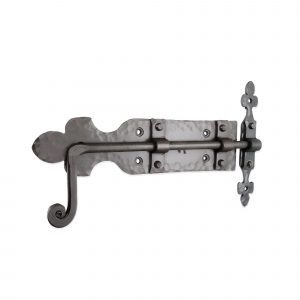
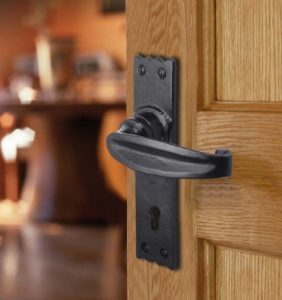
Barn conversions, rural properties with exposed beams, Arts and Crafts houses, farmhouse kitchens – this is where handforged ironwork belongs. The surface variation, the slightly uneven edges, the honest marks of the making process – all of that reads as completely authentic in those environments. Put the same hardware in a clean, white-walled London flat and it looks like a prop. 

One practical note for the client brief: iron in high-moisture rooms needs occasional treatment with a light wax or oil to stay in good condition & our products already comes with a beeswax coating which makes the iron moisture proof and prevents it from getting corrode. 

Matt Black: Still Works, but Stop Defaulting to It 

Three or four years ago, matt black was everywhere. Kitchen showrooms, hotel bathrooms, editorial shoots – it became the shorthand for contemporary design in the same way that brushed chrome was in the early 2000s. That level of saturation tends to date things. 

Used deliberately, matt black hardware is still sharp and effective. Industrial spaces, bold monochrome schemes, dark cabinetry – it reads as intentional in those contexts. The issue arises when it gets specified as a default rather than a decision. 

The one maintenance point worth flagging: matt black surfaces show dust more than clients expect. It looks exceptional on the day the photographer comes. After two weeks of normal life it needs attention. Worth mentioning before you finalise the schedule. 

Door Handle Door Hardware | Spira Brass

The Thing That Ties It All Together 

Whatever finish you land on, the single most important thing is running it consistently. Handles, hinges, escutcheons, bathroom accessories, cabinet hardware – when the same finish appears throughout a property in a coherent way, the scheme feels resolved. When it does not, something feels slightly off even if nobody can identify exactly what. 

Spira Brass carries all of the above finishes across their full architectural hardware range, which makes cross-room consistency straightforward to achieve. Samples are available through their stockist network across the UK – worth ordering before you finalise anything, because finish colours on screen and in person are rarely the same thing. 

We all do it. You arrive at the front door carrying your shopping, and you elbow the handle down or kick it a little at the bottom. It seems harmless enough. However, here is the point- those little daily routines are stealing years out of the life of your door handles. 

Door Hardware Door and cabinet accessories | Spira Brass

So whether you have spent up on beautiful door handles, solid brass door knobs or good architectural ironmongery, it does matter how you handle your hardware on a day-to-day basis. The good news? The majority of the damage is totally preventable, and you just need to know what to watch out on. 

And now we will pass through the most frequent offenders. 


Application of Harsh Cleaning Products on Hardware 

That is likely the most common error that the owners of the homes make concerning the maintenance of the door hardware. It is just logical – pick the same multi-purpose spray you apply on the worktops in the kitchen and wipe the handle. Job done, right? 

Door Hardware Handles | Spira Brass

Wrong. All domestic cleaners are bleach, ammonia or strong acid which is extremely nasty on brass and other metal finishes. Gradually these chemicals cause the protective lacquer on your door handles, which is made of brass, to be dull and rough and liable to tarnishing. What began as a shiny lever handle, might be seen in a few months to be worn and rusted. 

The solution is simple, a soft damp cloth and mild solution of soap should be used, as is necessary. In case of unlacquered metal, the trick is in a specialist metal cleaner that is applied sparingly. It is always important to dry the hardware well after, standing moisture is also another silent killer of good door hardware. 

Over-Tightening Screws on Hinges and Backplates 

When a hinge or a backplate is a little loose, the desire is to pick up a screwdriver and fasten everything as tight as you can. It appears to be accountable, even DIY-loving. Damage of door hinges and of the timber surrounding them is, however, one of the most common causes by over-tightening. 

By making sure that you over tighten screws, you squeeze and tear the fibers of wood behind the screws, that is, the screws no longer have anything to hold them after some time and the fittings slip off even quicker. The backplate itself can be broken or bent, too– especially by using thinner architectural hardware– or stripped of the screw heads, so that they become impossible to remove in the future. 

Door Hardware Door Hinges | Spira Brass

The correct method is to press hard and soft, tighten up until no movement is seen and then cease. When screws continue to loosen, the problem would be with the timber, but not the hardware. It is an old bit of joiner-trick to put in a couple of wooden matchsticks dipped into wood glue, into the screw-hole. 

Ignoring Stiff or Squeaky Handles and Hinges 

We have all had a squeaky hinge or a handle that requires a good heave to do the job. It turns into background music– something that you intend to clear up but you just never manage to do it. It is due to this reason that you should not leave it. 

A lever handle or door knob that can be felt as stiff is generally a sign that the internal mechanism – the sprung return – is becoming worn or dry. Each time you press a stiff handle, you are preventing the spindle and internal mechanisms against the needless pressure. And when left long enough, this will result in a complete break down of the mechanism, and the only way of putting it back on track is to completely replace the fitting, and not to smear a small portion of lubricant over it. 

Door Hardware Door Hinges | Spira Brass

The same thing can be said about squeaky hinges, which are dry and could be out of place. A drop of WD-40 or any lubricant silicone oil on the hinge pin is a long way. It is time to make it an annual home maintenance activity and you will be glad you did. 

Slamming Doors- More Damaging Than You Think. 

Hardware Door slamming action is same as speed bump driving at 40mph. The impulse shock regularly passes the vibration in all the parts, the latch, the lock, the hinges, the escutcheons, and the backplates. Months and years loosen this and bend the mechanisms and even break the rose plate on the more frail architectural door handles. 

The chief offenders are children and draughts. Door closers or soft-close buffers are an excellent investment – they not only help to save your hardware, but also the harmony at home. 


Not Observe the Keyhole and Locking Mechanism 

The majority of the population merely pays attention to their lock when it ceases to operate, and this is the same as just paying attention to your car engine when it runs out. The moving parts of mortice locks, rim locks, and latches require periodic lubrication in order to operate effectively. 

Door Hardware Knobs & Rim Lock | Spira Brass

Any hard pressing of the key, or harsh tugging at an unwilling latch is the surest method of bending the key, ruining the lock barrel, or completely cutting the latch mechanism open. A lubricating paint made out of graphite is rubbed directly inside the keyhole every one or two times in a year to ensure that everything runs smoothly. Oil based products should not be used in locks because they attract dust and gum up in the long run. 


Letting Condensation and Moisture Sit on Hardware 

Damp, we know about damp in UK. Yet when we are taking all this time worrying about damp on walls, the hardware on our front doors and the doors to our bath rooms is soaking and soaking without any sound. The condensation as well as the rain splash and steam in the bathrooms can also find their way into the joints and fixing of door hardware and cause corrosion, tarnishing and stiffening mechanisms. 

The front door hardware is particularly exposed. In case you observe the presence of water around your door knocker, letterplate or door knob when it rains, have a wipe down. It is just a moment and it really counts to the life of your door furniture. 


A Little Care Goes a Long Way 

Good architectural hardware – a gracefully made door handle, or a hand-weld hinge of iron, or a vintage mortice door knob – is designed to take decades to wear out. But it does require a lending of your hand. 

Replace the rough cleaners with the soft ones. Lubricate once a year. Wipe down after wet weather. Don’t force stiff mechanisms. These little practices do not consume hours but save your investment in years. 

At Spira Brass, we are producing and selling quality architectural hardware, which is meant to be able to withstand the test of time comes with high quality premium protective coating which gives you a hassle-free usage experience no tension of maintenance for a long period. You can also find our entire selection of door handles, door knobs, hinges, locks and front door hardware at Spira Brass. 


You have experienced that sensation when you enter your house and that something is going wrong. Not right, but not that right either. It is not always the paint color or the furniture set up that is making you feel frustrated sometimes it is those tiny things that you never really give a second thought before they are worn out.

Door Hardware | Spira Brass

I mean the handles in the doors, your cabinet knobs, the handles in your drawers, and all those other metal pieces that you touch dozens of times a day without even thinking about them. One day they were splendid and shiny, and now? They are wearing sort of shabbier, dirt, dullness. Maybe even a bit sad.

So what happened? We can get into the reasons as to why your hardware decor is getting old faster than you would prefer and more so, what you can do about it.

The Truth About Those Daily Touches

The point is as follows: those hands of yours are little chemistry laboratories. Whenever you get a door handle or open a drawer, you are leaving behind oils, sweat, lotions and all kinds of stuff that you have touched during the day on the metal. And I do hate to tell you, but human skin is acidic to a small degree. This acid gradually removes the finish that the hardware has on it.

Door Hardware | Spira Brass

Consider your most frequented door handle, most likely it is the one to the bathroom or bedroom. It is touched upon many times a day. That’s a lot of contact, and metal finishes aren’t invincible. The continuous touching erodes the protective coating little by little revealing the base metal. This can be normally seen on plated finishes like brushed nickel, oil-rubbed bronzes or polished brass.

The Invisible Enemy: Air Quality and Humidity

The quality of the air in your house is even more of a factor than you may imagine. One thing that you may notice was the fact that metal objects do not wear as well in a humid climate or towards the seas. This is because when there is moisture in the air, it becomes a source of oxidation, which rusts iron.

Door Hardware | Spira Brass

Even when you are not at the beach, daily tasks such as food preparation, showers, and even inhalation make your house air moist. Metal hardware especially does not perform well in bathrooms and kitchens. Hot shower steam as well as cooking vapours has not only water but also chemicals and minerals that can react with metal finishes.

And do not even mention cruel washing products. The lemon-smelling cleaner that you like? It may be slowly eating off the finish of your hardware. A lot of domestic detergents have acids or abrasives that in the long run can dull and destroy metal surfaces.

The Thin Finish Problem

This is an unpleasant fact: not every hardware is equal. That builder-grade door knob that your house had? It is likely of extremely thin finish, which was intended to stop the eye on the day of installation, rather than decades.

The cheaper hardware is frequently plated with less expensive techniques or thin finishes of lacquer which begin to corrode in one or two years. It is not readily apparent, but slowly the finish begins to appear patchy, discoloured or it may wear right through in contact areas.

The base metal matters too. In case it has a coating of a low-cost alloy on top, you will see that it is going to wear out at a very rapid rate compared to high-quality iron or solid brass.

The Sunshine Situation

Natural lighting is wonderful for your mood and your electric bill but not always great for your hardware finishes. The UV rays may make some finishes fade or discolour after some time, especially on the exterior doors or windows which are directly exposed to the sun.

You may be able to observe that the handle of your sun-drenched front door is not the same as that of your house. That is UV damage, to the point that it is gradually deteriorating the molecular structure of the finish.

The Maintenance We All Skip

And to tell the truth – when did you last wash your door knobs? I mean really cleaned them, not just given them a quick wipe when you noticed a smudge? The hardware should be maintained on a regular basis to ensure that it always looks good.

The dust, dirt, and grimes settle in the cracks and crevices forming a dull film rendering everything old and weary. This accumulation without periodical cleaning using the appropriate products promotes the aging process.

What You Can Do About It

The good news? You do not need to use outdated and aging hardware forever. Frequent light washing with a soft cloth and mild soap might perform miracles. Don’t use aggressive cleaners, and make sure your hardware is completely dry to avoid wet stains and rust.

In the case of damaged hardware that is already damaged, you can make a choice. Specialized polishes can be used to restore some finishes but this is normally a temporary solution. In most instances, the best option is to just buy the hardware with better-quality hardware which has been made to last.

Door Hardware Door and cabinet accessories | Spira Brass

To choose out new hardware, look for well-built items that have superior finishes. Living finishes such as unlacquered brass actually age to a beautiful patina and not just seen as being worn out. It is the difference between the graceful aging and the mere appearance of old age.

Think of the place that your hardware lives in as well. Hardware in the bathrooms and kitchen must be particularly hard and not easily affected by moisture and chemicals. And when you have busy locations, spend a lot of money on hardwares which survive the wear and tear as well.

The Simple Truth

Your hardware is a hard-working machine on a daily basis. With the oil of your hands to the moisture in your house, cleaning agents, the sunshine, and those finishes that used to be so shiny are beginning to look a little brashy at the edges, no wonder.

However, here is the point: your hardware is not only functional, but it is a piece of jewellery in your home. Those simple elements are likely to have a larger impact on your space than you may realise.  New, gorgeous equipment can totally change the appearance and the feel of the room.

Door Hardware Cupboard Knob | Spira Brass

At Spira Brass we take a special care about the finishing and its durability whether on brass, iron or any material we use best techniques to make the finish durable and premium. Our brass range comes with a lacquered coating a layer which makes it corrosion resistant and long lasting. Handforged our hot dipped, Blacksmith range is salt tested comes with zinc coating before black powder coating and our Ironmongery collection also comes with a protective layer which makes them weatherproof and suitable for both interior and exterior use.

Our collections are meant to last for generations forged to impress you with their design and quality so that our products can stand many steps ahead when it comes to quality and design because they are tested made of high-grade metals.

We believe buying hardware should be one time investment that’s why at Spira Brass we take care of all your problems so that you don’t have to worry about regular hassle of cleaning or maintaining them or wasting time on searching replacement of your hardware’s after a while.

The United Kingdom is a country that is renowned with its great architectural heights, multi-cultural background and classic designs that certain things never go out of style. But as soon as you enter the doors and gates and even into the interiors of UK most certainly you will discover something very special – hardware so keenly turned out. Hardware has been shaping the British historical scene, based on Victorian door knobs, Georgian handles and conventional brass finishes.

We are inspired by the same architecture and create the hardware of our collections Victorian, Georgian, Beehive, Modern. This blog talks of how the hardware design of Famous landmarks in UK explains that their history and Spira Brass is contributing to a renaissance of heritage styles in the modern homes.

Downing Street Ten: The Georgian Show That Never Closes

The black door of Ten Downing Street is a ubiquitous symbol visible in the whole world, the icon of hardware classicism to this Georgian period. It has an attractiveness in its simplicity and in its good proportion.

Iconic Hardware Features

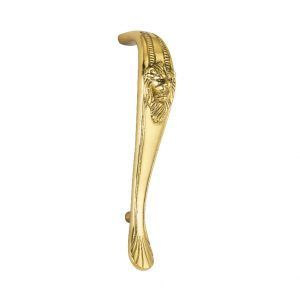
  • Bright yellow Lion Door Cabinet Handle  Exudes authority and control.
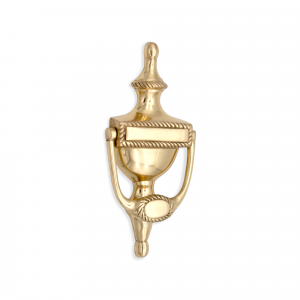
  • Georgian-Style Door Knocker Practical and beautiful.
  • Slim and sleek brass fixtures Good when one wants to be formal.
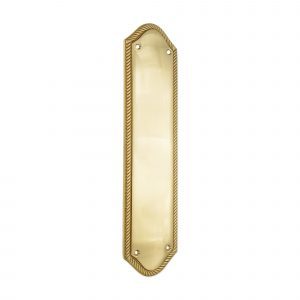
Door Knocker - Spira BrassFinger Plate - Spira BrassCabinet Handle - Spira Brass

Spira Brass Connection

Georgian is flawless as Downing Street. These products with their sharpness of the lines, the ideal proportion balance, and breathtaking brass sounds will be perfect addition to any high-style house, old or new.

In case of a need of a British formal classic entrance we suggest a Georgian handle or knocker (the one of Spira Brass).

Buckingham Palace: The Royal Victorian Touch

Buckingham Palace hardware is a good specimen of the overboard luxury and pomp of the Victorian style in hardware, which is vast, lavishly decorated, full of trifles.

Iconic Hardware Features

  • Metalwork gilded in gold
  • Handles and knobs Royal style brass.
  • Very elaborate designs and lines.

Spira Brass Connection

The Victorian style of the hardware proposed by Spira Brass is crafted with the same taste with the palace and as royal in its appearance. It is a collection that is very suitable to those who are interested in the vintage-style appearance, but rich in style.

It communicates:

  • elegance
  • richness
  • timeless British luxury

The Spira Brass Victorian hardware has been the foremost towards attaining the palace like grandeur in the humble families.

The Tower of London: The Power of Traditional Ironworks

Tower of London possesses white and powerful appearance of medieval ironware. On the one hand, it is a basic installation, but the personality is in these coarse textures and ruggedness.

Iconic Hardware Features

  • Heavy iron hinges and bolts
  • Hand-turned and rustic handles.
  • Dark, aged metal finishes

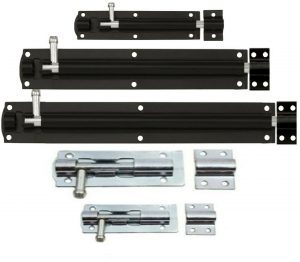
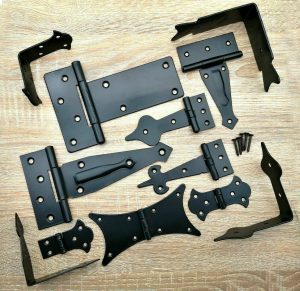
Bolts - Spira Brass Hinges - Spira Brass

Spira Brass Connection

Although Spira Brass is a manufacture of brass hardware, our Beehive and Heritage Series have been made using the same traditional thinking of rugged and old fashioned.

Beehive is a fashion that was popular both in the late Georgian era and Victorian times, but is adored because of:

  • Handcrafted appearance
  • Rounded grooves
  • Traditional charm

It does very well on wooden doors, country houses, and old inside.

Westminster Abbey: Artistically Influenced Hardware

Not merely is the Westminster Abbey the climax of Gothic construction, but also the various ornamental metalwork pieces which adorn the building are knockouts which help to enhance the beauty of the building.

Iconic Hardware Features

  • Ornamental, sharp pointy iron handles.
  • Antique brass finishes
  • Intricate metal patterns

Cabinet Lock - Spira Brass

Spira Brass Connection

Our Beehive and Victorian have a comparable artistic, handmade feel. These designs are effective utilization with the British traditional homes, heritage doors and luxurious wood finishes.

Select something traditional, vintage, but daring these are the styles that fit best.

The British Museum – Classical Inspired Symmetry

British Museum is one of the best examples of British neoclassical architecture that is symmetrical, well organized and immortal. The hardware design is also very minimalistic, and this is what supports the feeling of serenity and elegance of the architecture.

Iconic Hardware Features

  • Bronze and brass handles
  • Simple and balanced shapes
  • Little ornamentation and more harmony.

Spira Brass Connection

Regulating rules that are governing our Modern line are no exception: plain outline, symmetrical and graceful finish. Compared to over the top Victorian hardware, contemporary hardware.

  • Simple
  • Functional
  • Elegant

This is what makes Spira Brass Modern hardware most suitable in the British-style interiors of the contemporary style.

The Beauty of Traditional Beehive Six British Cottages

Another feature of the hardware that has existed throughout the span of hundreds of years, namely, Beehive knobs, is the presence of the traditional British cottages everywhere in the countryside.

Iconic Hardware Features

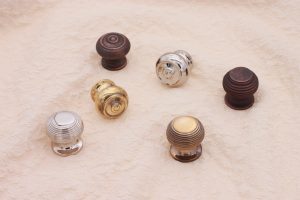
  • Round, grooved beehive knobs
  • Old antique finishes Black or brass.
  • Hinges and latches are made cottage style.
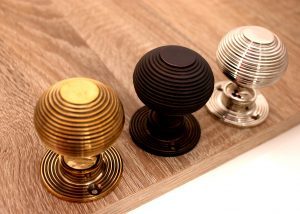
Beehive Door Knob - Spira brass

Spira Brass Connection

The cottages designs are inspired hardware designs that are direct imitations of Spira Brass Beehive door knobs and door handles. They provide:

  • An old fashioned, vintage style of feel.
  • The outward and the touch of the work.
  • The prototypical blend of vintage or antique decoration.

This is an optimal price to the consumers who are sensitive to the classic British tradition.

Edinburgh Castle- Strong, Bold and Classic

In Edinburgh Castle, hardware is not only seen and felt to be robust but also established well.

It highlights the designs as tough and not adorning.

Iconic Hardware Features

  • Hammered iron knockers
  • Large studs and iron plates
  • Weather-resistant metalwork

Spira Brass Connection

Spira Brass is the producer of brass hardware that has an antique finish and represents the strength and the history of the iron design but gives the durability and the high standard of the feel of the brass.

Best when the customer wants a bold entrance door with the vintage feel to it.

The way Spira Brass makes the British heritage relevant in the contemporary home.

The hardware produced by Spira Brass is indeed British as far as design values are concerned. The same may be met with in the UK landmarks:

Victorian collection – The Royal British Architecture as a Source of Inspiration.

The one that is extremely popular among those clients who would wish to have their works being luxurious and detailed.

The Georgian assortment – The Traditional British Beauty as an Inspiration.

This would fit the tastes of those who value simplicity and absence of decadence, symmetry, and bare brass.

Bee honey picking – Beehive as a Inspiration in the British Countryside Homes.

The right projects that should be incorporated in this collection would be the heritage or the vintage-style home projects.

Contemporary – The Contemporary British Living as a Source of Inspiration.

This is created in the clean, minimal and luxurious spaces.

The dwellers, the constructors and the designers are left with the option of whether they would like to introduce into their homes what is actually British in terms of selections of this brand which can be royal, classic, traditional or even modern.

Conclusion

The only thing the UK popular locations are teaching us is that hardware is not just a trifled fact, it is a historical reality and a creation. Each of the styles dates back to Georgian beauty of Ten Downing Street, to the Victorian beauty of the Buckingham Palace, as they each have their story.

Spira Brass is happy to pursue the tradition of Victorian, Georgian, Beehive and Modern lines of hardware collections, which are all based on the timeless beauty of the British architecture. It is either you are doing a classical home or a contemporary interior with a touch of a heritage, our products will give you a chance to bring the authentic British way of classiness in your place.


Sign Up Newsletter

Sign up our newsletter and save 25% off for the next purchase!

Subscribe to our newsletters and don’t miss new arrivals, the latest fashion updates and our promotions.